
Skellig Michael is the island at the end of the Star Wars film The Force Awakens, released in 2015. It appears again in The Last Jedi. In both films it plays Ahch-To, the ocean planet where Luke Skywalker has been hiding. Visitors on our boats often ask how much of it is real. The answer is most of it.
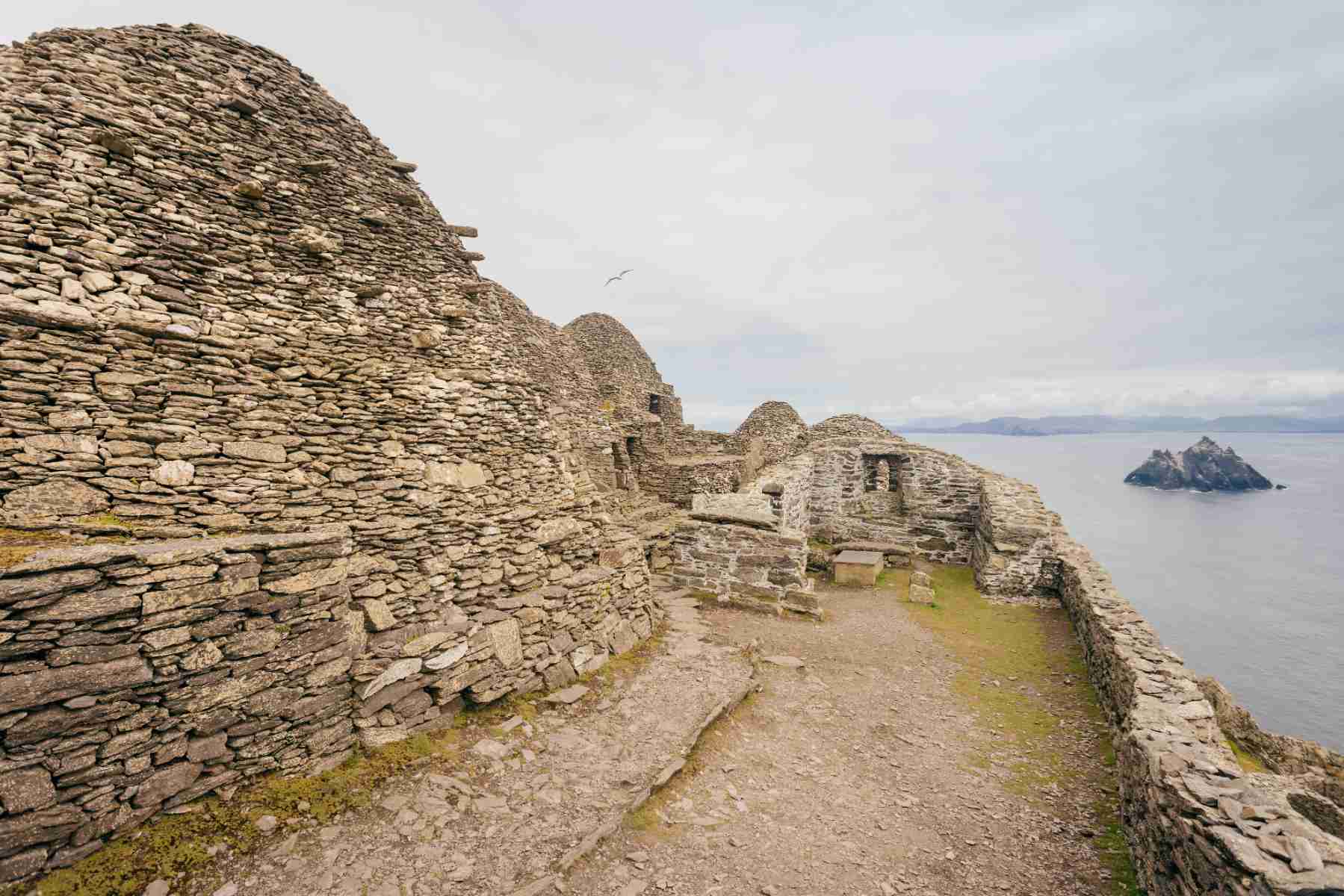
The Jedi Temple and the real monastery
In the films the island is home to the first Jedi Temple. Rey walks through a group of stone huts to find Luke. The Jedi story is fiction, but the huts are real.
They are clocháns, or beehive huts. Christian monks built them after they settled on the island around the 6th century.
The monks used a method called corbelling. They laid flat stones in rings, each ring set a little further in than the one below, with no mortar. Each stone tilts slightly outwards so the rain runs off. The huts are still standing today.
When you walk round the monastery, you are not on a film set. Skellig Michael has been a UNESCO World Heritage Site since 1996.
The steps Rey climbs
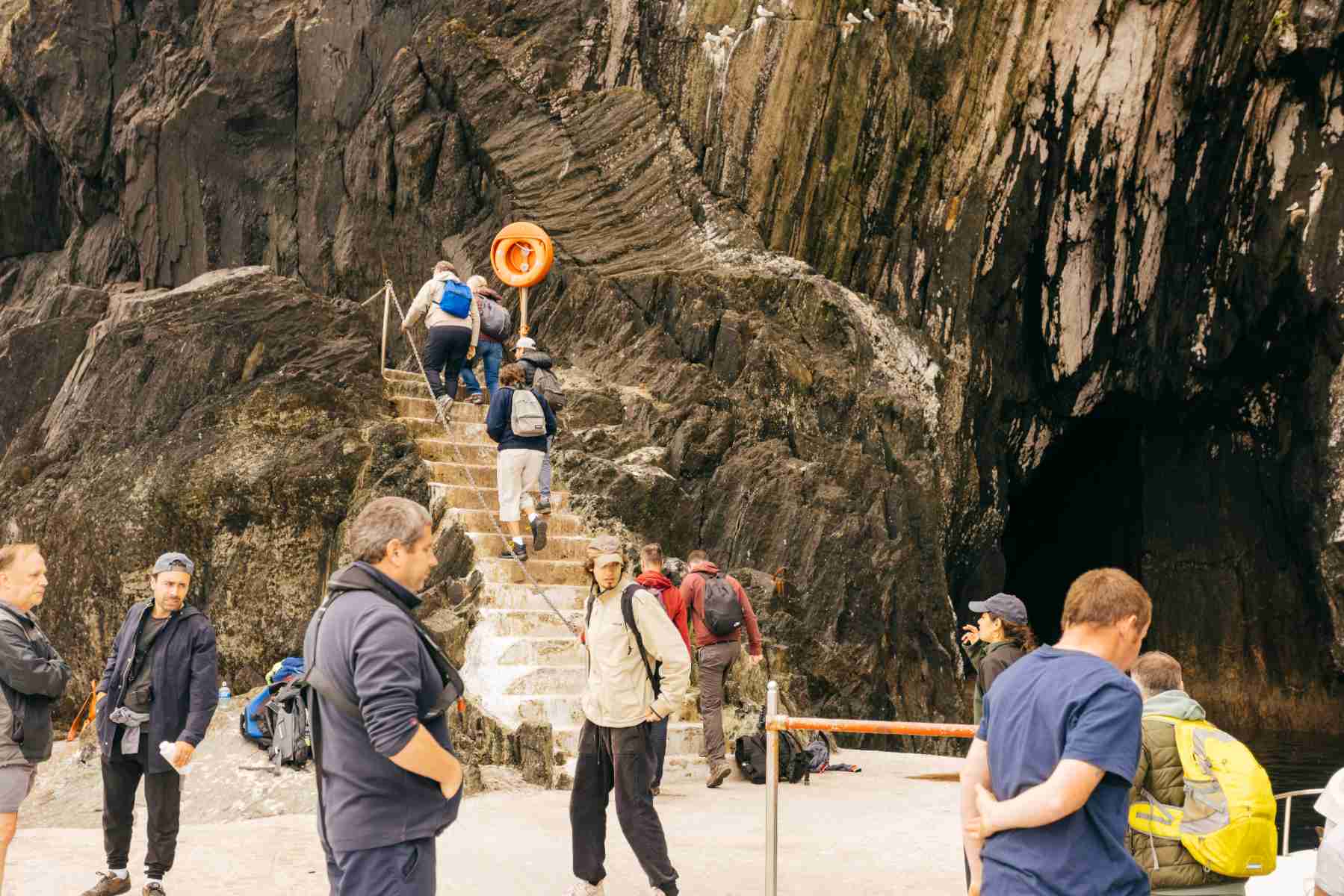
At the end of The Force Awakens, Rey climbs a long, winding stone stairway to find Luke. These are the real steps of Skellig Michael.
There are 618 stone steps from the landing to the monastery, with no handrails. The monks built them more than 1,000 years ago. The film crew had to carry their equipment up the same steps. Mark Hamill, who plays Luke Skywalker, and Daisy Ridley, who plays Rey, climbed them too.
Why are there porgs?
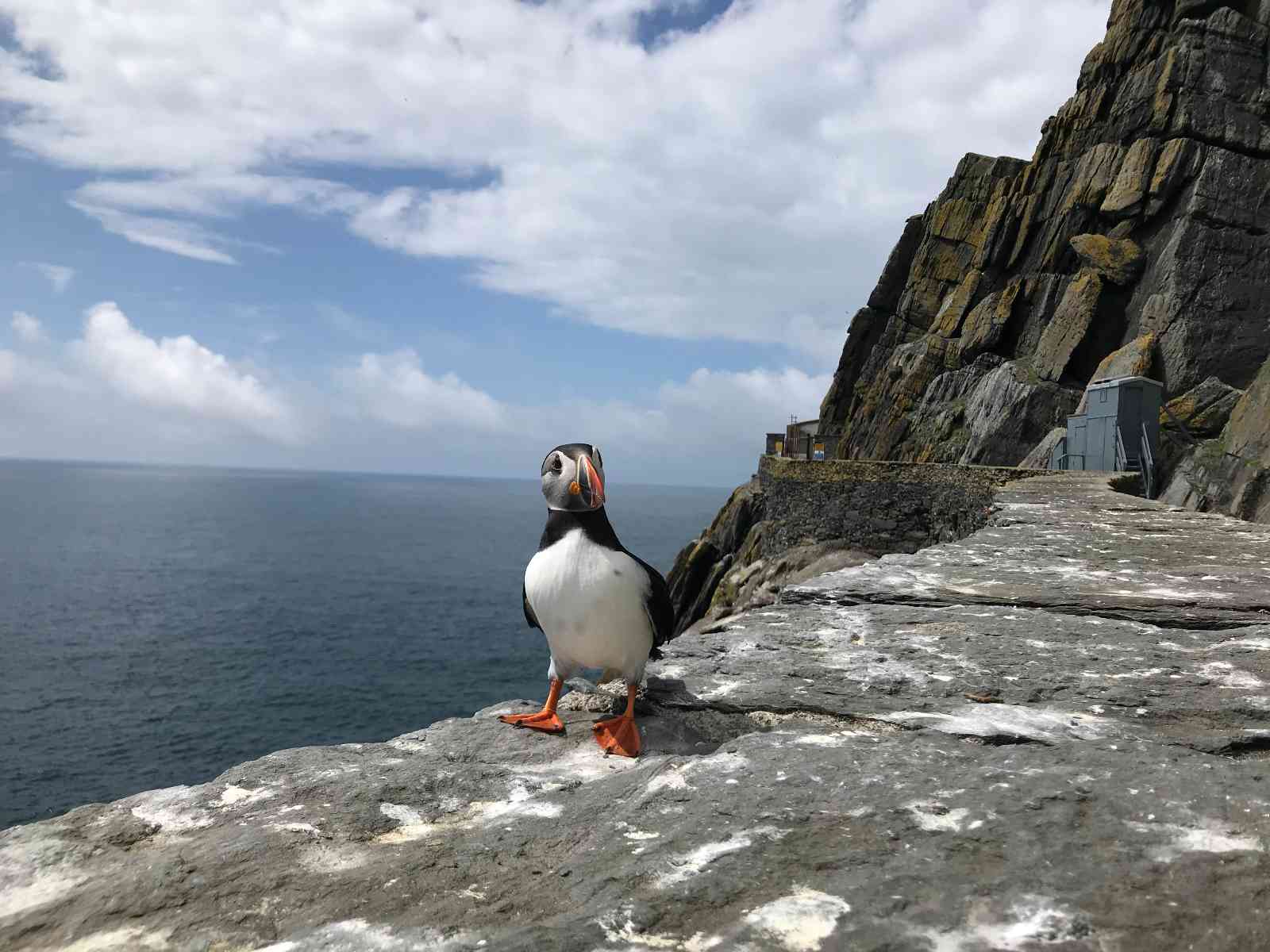
Porgs are the small, wide-eyed birds that live on Ahch-To in The Last Jedi. They exist because of puffins.
Puffins nest on Skellig Michael from about late April to early August. When the crew filmed The Last Jedi, there were puffins on the steps, on the huts and flying past in the background.
It would have cost a lot to remove every puffin from the footage. Instead, the team designed the porgs, based on the puffins, and used them to cover some of the real birds.
You will not see porgs on our trips. If you land between mid-May and July, you are likely to see puffins nesting right beside the paths. Our puffin guide explains when to see them.
Which Star Wars scenes were filmed on Skellig Michael?
Skellig Michael is a protected site with strict rules on filming. The crew had a limited number of days on the island.
The wide shots of the island and the scenes at the monastery were filmed on Skellig Michael. Many of the close-up scenes between Luke and Rey were filmed elsewhere.
The team built copies of the beehive huts at Malin Head in County Donegal and on the Dingle Peninsula. There they could film late into the night and use heavy equipment that could not go on the real island.
The real history
The monks who lived here grew vegetables in small terraced gardens and ate fish and seabirds. Vikings raided the monastery in the 9th century. The monks left in the 12th or 13th century and moved to Ballinskelligs on the mainland.
The films made the island famous around the world, but its history goes back to the 6th century. You can read more about daily life of the Skellig Michael monks.
Visit Luke Skywalker’s island
To climb the steps and see the huts, you need our Skellig Michael landing tour. It takes about 5 to 6 hours in total, with about 2.5 hours on the island. It is for ages 14 and over and needs good fitness. It runs from mid-May to the end of September, weather permitting.
Landing numbers are limited each day by the OPW, so book early. Landing is never guaranteed because it depends on the sea.
If you cannot do the climb, our Skellig Islands boat tour circles Skellig Michael and Little Skellig. It suits all ages. All tours leave from Portmagee.
You can send us a booking request or call us on +353 66 948 8022.