
The best time to visit Skellig Michael is May to July, when the most puffins are on the island. Landing tours run from mid-May to the end of September, and boat tours run from April to October. Every trip depends on the Skellig Michael weather and the sea on the day.
Which tours run when?
Our Skellig Michael landing tour takes you onto the island to climb the 618 steps to the monastery. It runs from mid-May to the end of September and is for ages 14 and over.
Our Skellig Islands boat tour circles Skellig Michael and Little Skellig without landing. It runs from April to October, takes about 2.5 to 3 hours and suits all ages.
The Office of Public Works (OPW) limits how many people can land each day, so in summer landing places are often booked months ahead.
Skellig Michael month by month
April
You can take a boat tour around the islands in April, but you cannot land yet. The first puffins come back to the islands in late April.
May
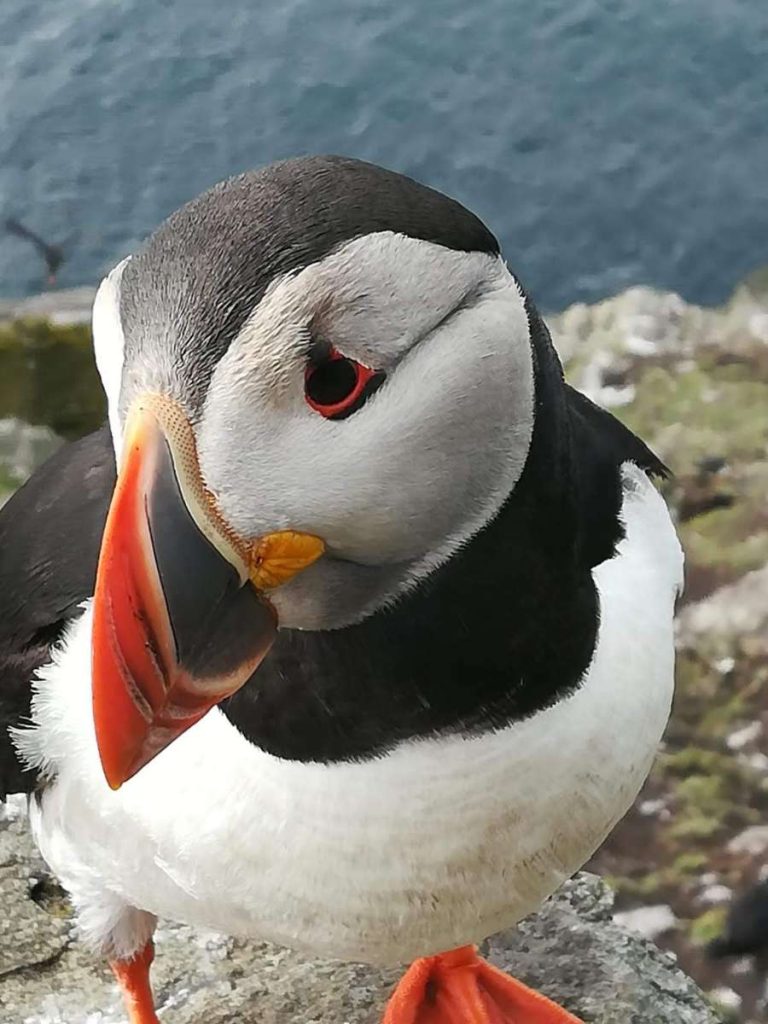
Landing tours start in mid-May, when the puffins are settling into their burrows and are easy to see.
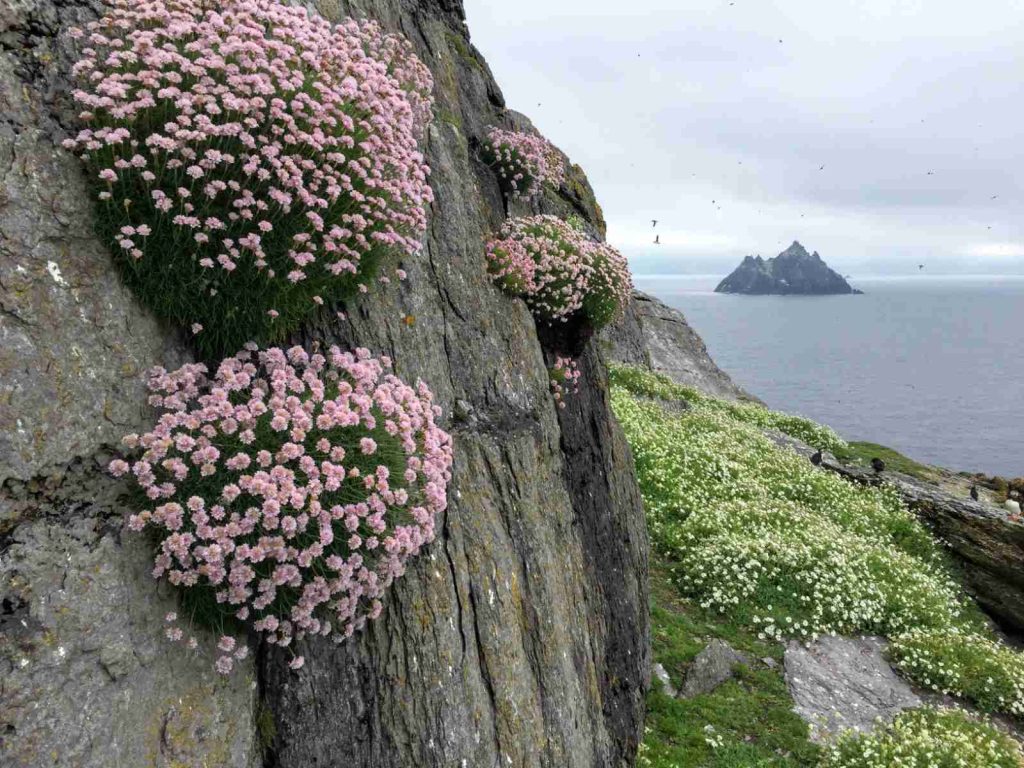
Sea pinks, also called thrift, flower on the cliffs in May. The air is often clear, which is good for photos, but it is still cool on the water.
June
June has the longest days of the year and is one of our two busiest months, along with July.
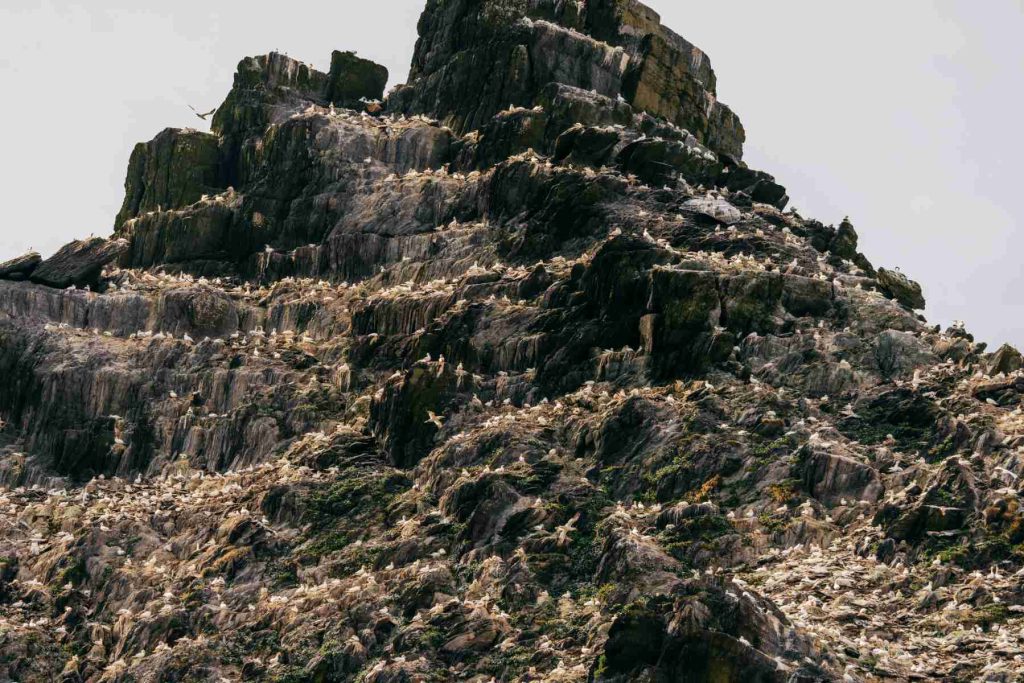
The puffins are feeding their chicks and fly back and forth with sand eels. The gannet colony on Little Skellig, one of the biggest in the world, is busy too.
The sea is often at its calmest in June and July, although swells can still happen. The skipper and the OPW guides decide each day if it is safe to land.
July
July is just as busy, and the puffins are still feeding their chicks, so book landing tours well ahead.
The climb can be hot in the middle of the day, so bring plenty of water because there is none on the island.
August
The puffin chicks leave in the first two weeks of August, and the adults soon follow. After mid-August you are unlikely to see puffins.
Gannets stay on Little Skellig until later in the autumn. The sea is at its warmest in August, and it is often a good month to see minke whales and common dolphins.
Our Skellig Coast whale watching tour takes about 4 hours and is for ages 5 and over, although sightings are never guaranteed.
September
September is the last month for landing tours, and there are fewer visitors than in summer.
Autumn storms are more common, so more tours are cancelled because of swell or strong wind. Keep your plans flexible if you visit in September.
October
Boat tours still run in October when the sea allows, but there is no landing on Skellig Michael.
November to March
Our Skellig boat and landing tours do not run from November to March, when the puffins are away at sea for the winter.
What is the Skellig Michael weather like?
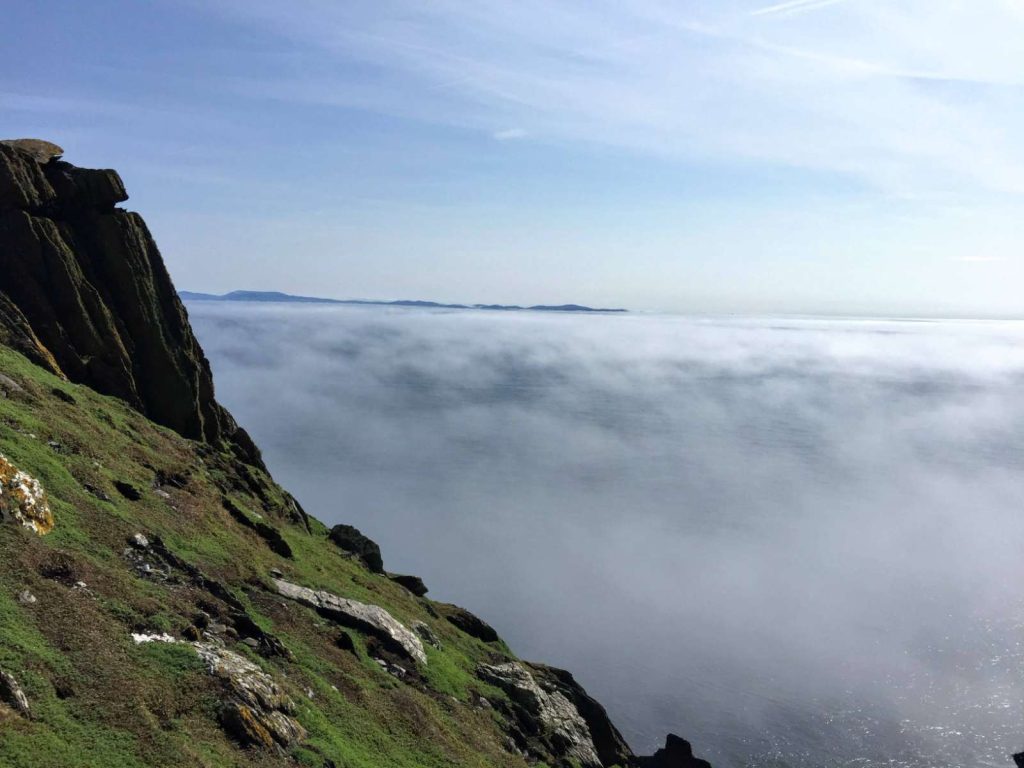
Skellig Michael is about 12 km off the coast in the open Atlantic, where the weather can change quickly, even in summer.
The crossing from Portmagee takes about 45 minutes to 1 hour. It is often cool on the water, so bring warm layers and a waterproof jacket, and wet weather gear is available on our boats.
We decide each morning whether to sail, using the forecast and reports from the island. If the crossing or the landing would not be safe, we do not go.
If the weather stops your trip
If we cancel for weather, we offer another date or a full refund. Try to book your trip early in your stay in Kerry, so there is time to rebook if needed.
If you cancel more than 48 hours before departure, you get a full refund. Within 48 hours there is no refund unless we can fill your place.
Before you land
The landing tour climbs 618 stone steps with no handrails, so you need good fitness. Read how many steps are on Skellig Michael for tips on the climb.
There are no toilets, shelter, bins or shops on the island, so bring water and food, and take all your rubbish home.
Stay on the paths so you do not collapse puffin burrows, and keep your distance from the birds.
Which month should you choose?
- To see puffins. Come in May, June or July, and read our puffin guide to see what they do each month.
- To land on the island. Come between mid-May and the end of September.
- For long days and calmer seas. June and July are usually best.
- For whales and dolphins. August is often good, but sightings are never guaranteed.
- For fewer people. September is quieter, but more trips are cancelled.
- For a boat trip only. Boat tours run from April to October.
When you have picked your dates, book your Skellig tour.