
The Skellig Michael monks lived on a steep rock island about 12 kilometres off the coast of County Kerry. They were early Christians who founded their monastery around the 6th century as a place to live apart from the world and focus on prayer. This post explains how they got there, where they lived, what they ate and why they left.
Getting to the island
The monks crossed to the island in currachs, which are traditional Irish boats made of a wooden frame covered in animal hides. It took skill to cross about 12 kilometres of open Atlantic in one.
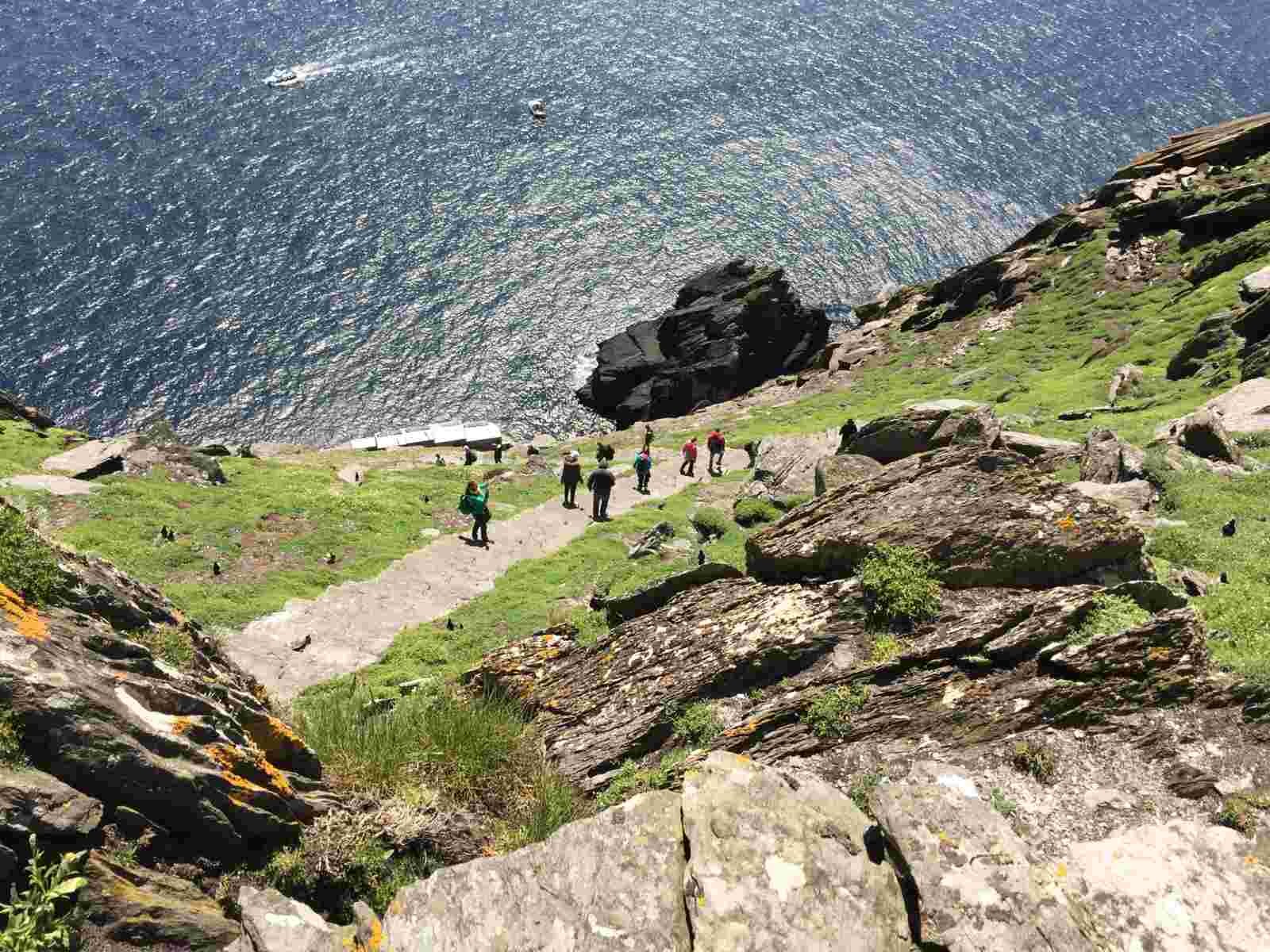
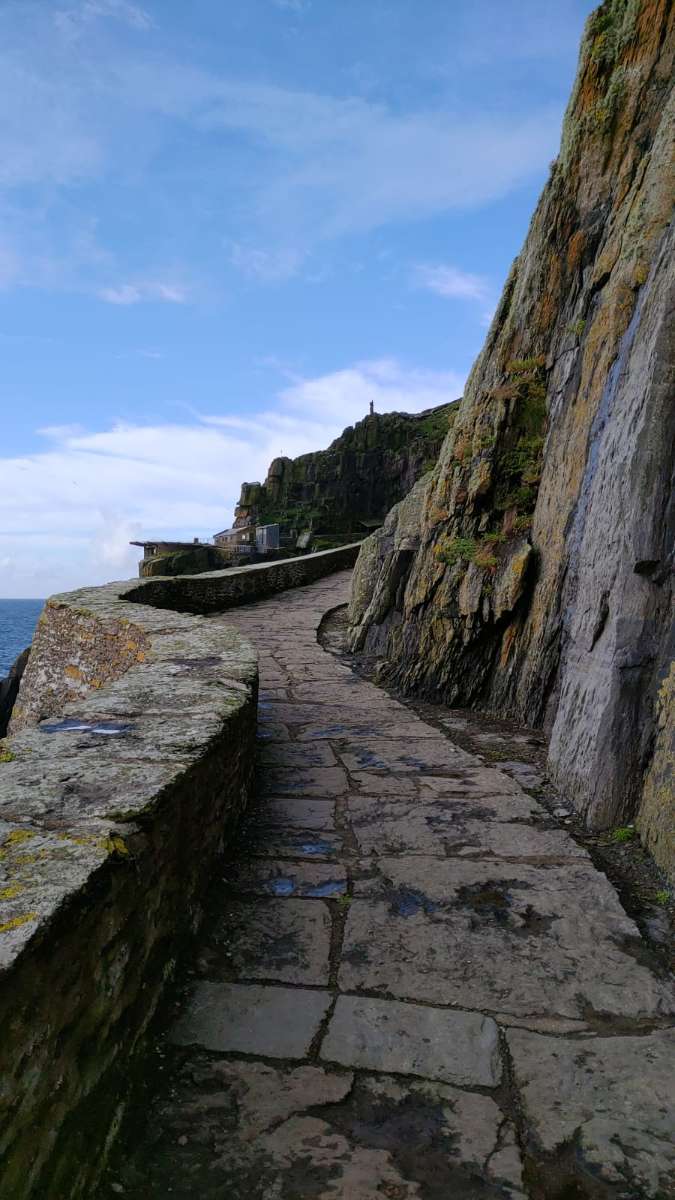
There were no paths or easy landing places, so the monks built stone steps up the cliffs to their monastery. Visitors today climb 618 of these steps from the landing to the monastery, which sits about 180 metres above the sea.
Every trip down to the sea to fish or check the boats meant a steep climb back up, which the monks made in all weathers.
The beehive huts
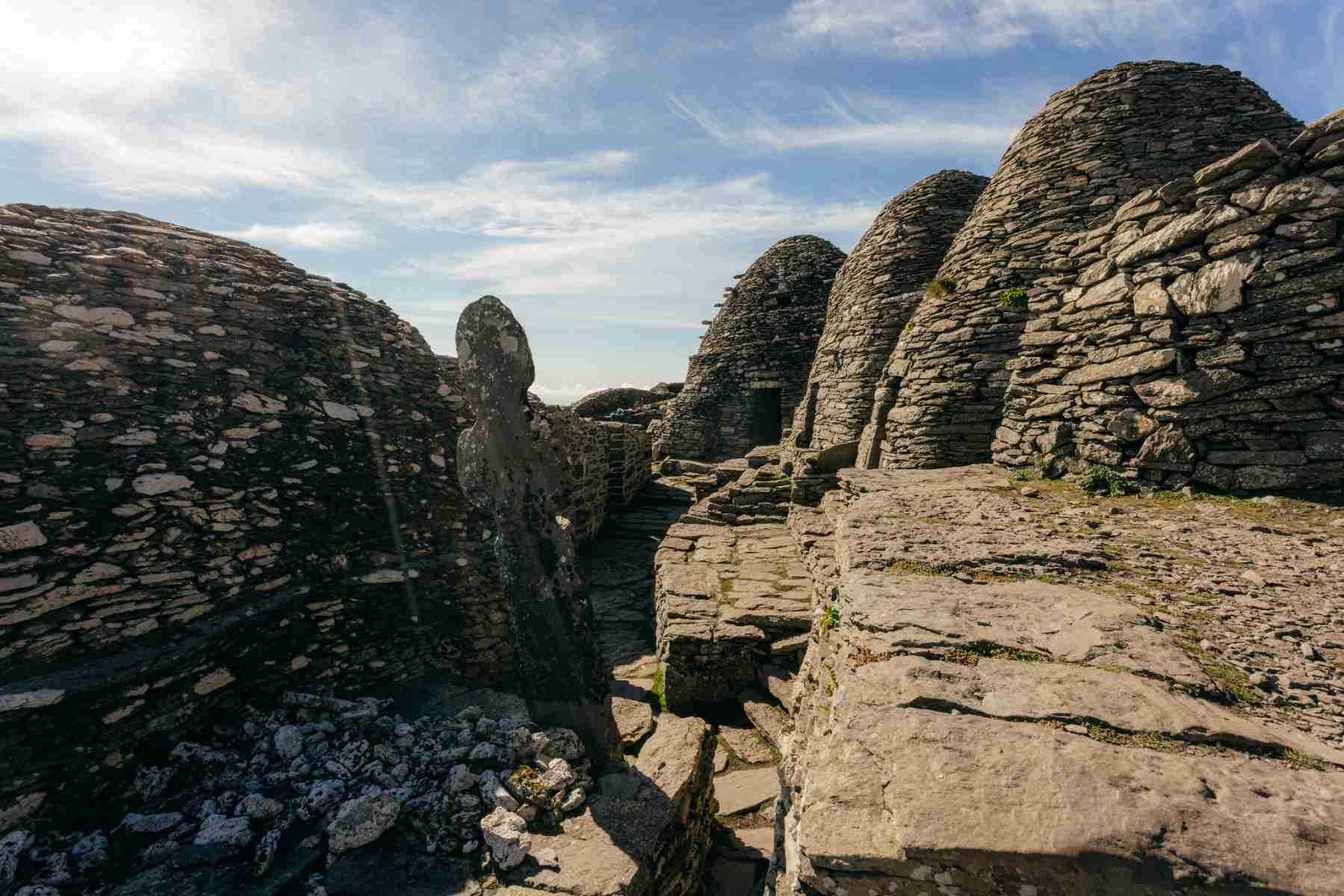
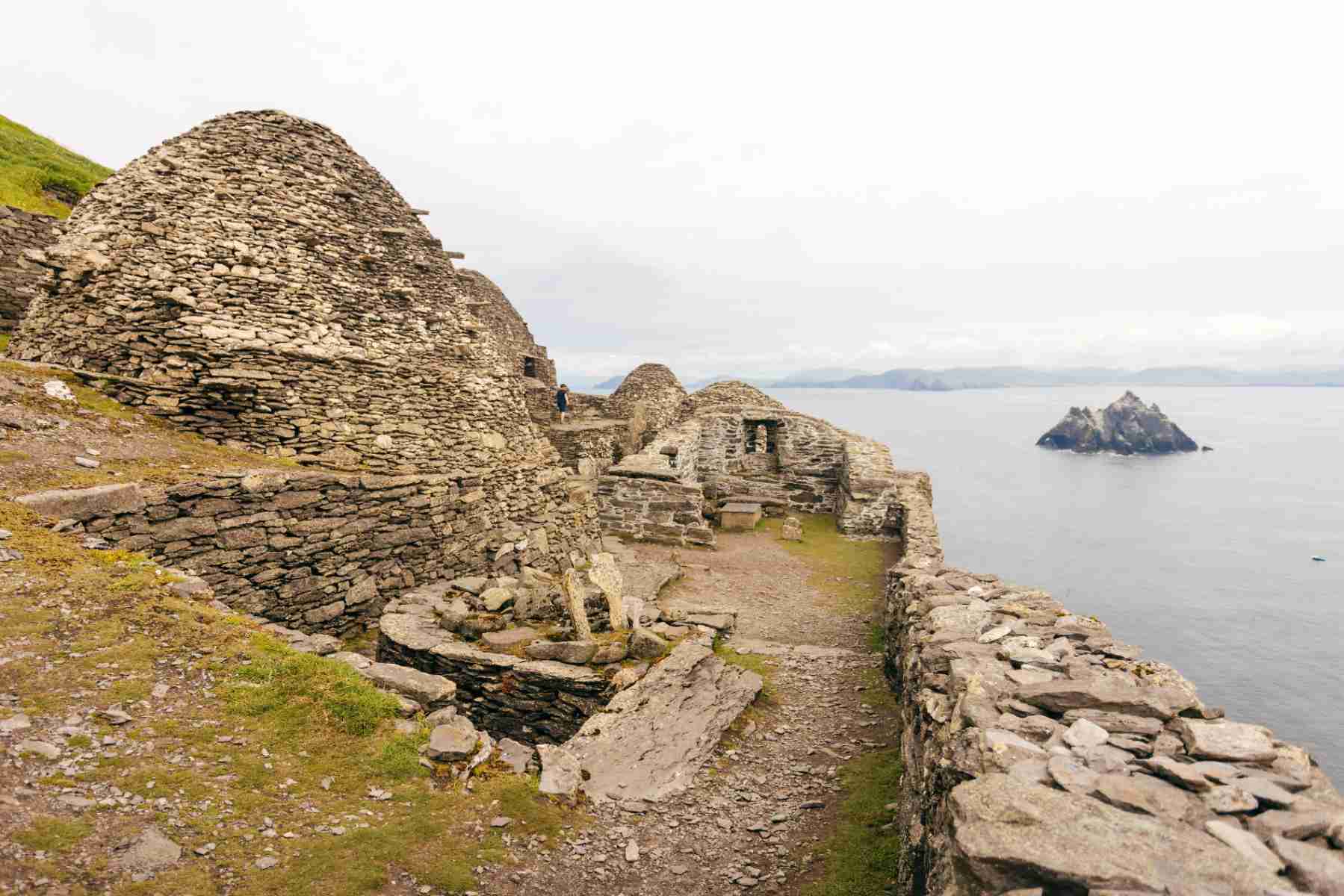
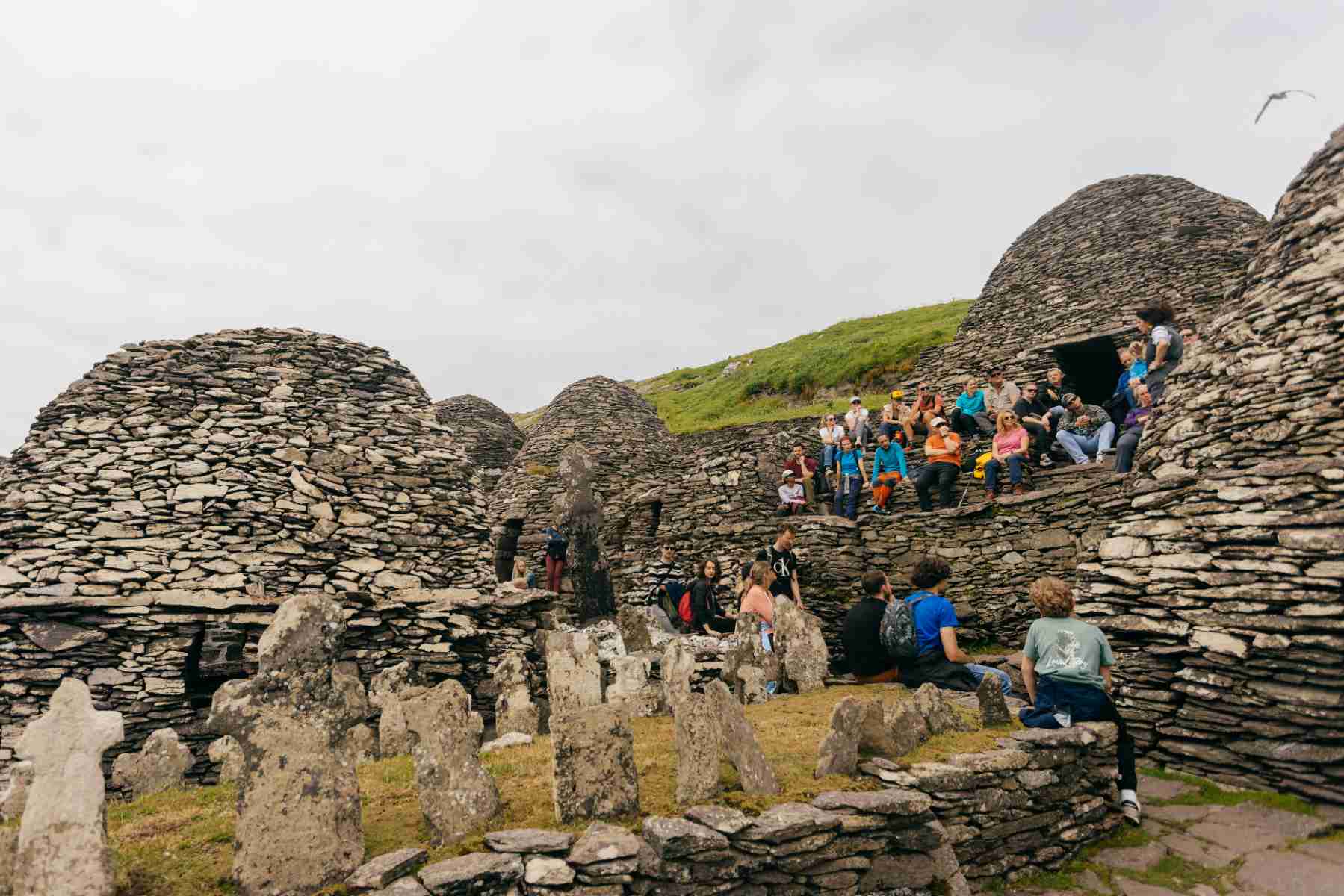
At the top of the steps is the monastery, with six beehive huts, called clocháns, two oratories and a church.
The monks built the huts by corbelling. This means laying flat stones in rings, each ring set a little further in than the one below, until the walls meet at the top. They used no mortar, and each stone tilts slightly outwards so rain runs off.
The huts have stood through Atlantic storms and salt spray for more than 1,000 years. Inside, where the monks slept, studied and prayed, they are dry and quiet.
The community was small, thought to be about 12 monks and an abbot. They lived close together but spent much of their time in private prayer.
What did the monks eat?
There was almost no soil on the island, so normal farming was not possible. The monks built small terraced gardens with soil made from seaweed and compost, where they grew a few hardy vegetables and herbs.
Most of their food came from the sea and the cliffs.
- Fish. The sea around the islands had plenty of fish.
- Seabirds. They ate gannets, puffins and razorbills.
- Eggs. In the nesting season the cliffs gave them a good supply of eggs.
- Rainwater. This was their most important resource, and the monks built stone channels to carry rainwater into underground tanks called cisterns.
Life followed the seasons, and in winter storms could stop the monks fishing or getting supplies from the mainland for weeks.
Why live so far from land?
The monks chose to be cut off. Living so far offshore kept them away from the politics and fighting in Ireland at the time, and let them focus on prayer.
When did the Skellig Michael monks leave?
The island was not always safe, and records show that Vikings raided the monastery in the 9th century.
The monks left in the 12th or 13th century and moved to Ballinskelligs on the mainland. A change in the climate and changes in the Irish church are the usual reasons given.
The buildings they left behind are still standing, and Skellig Michael has been a UNESCO World Heritage Site since 1996. Our Skellig Michael history page has more on the monastery.
Visit the monastery yourself
Our Skellig Michael landing tour gives you about 2.5 hours on the island. That is enough time to climb the steps and walk round the beehive huts.
The tour takes about 5 to 6 hours in total and runs from mid-May to the end of September, weather permitting. It is for ages 14 and over, and you need good fitness for the 618 steps, which have no handrails.
Landing numbers are limited each day by the OPW, so book early. Landing is never guaranteed because it depends on the sea. All our tours leave from Portmagee, where you should arrive at least 30 minutes before your departure to park and check in.
There are no shops, toilets, shelter or bins on the island. Bring a packed lunch and a drink, and take your rubbish home with you.
Before you go, read our guide to the Skellig Michael steps. For tour times or other questions, contact us.