
About the island
Skellig Michael facts
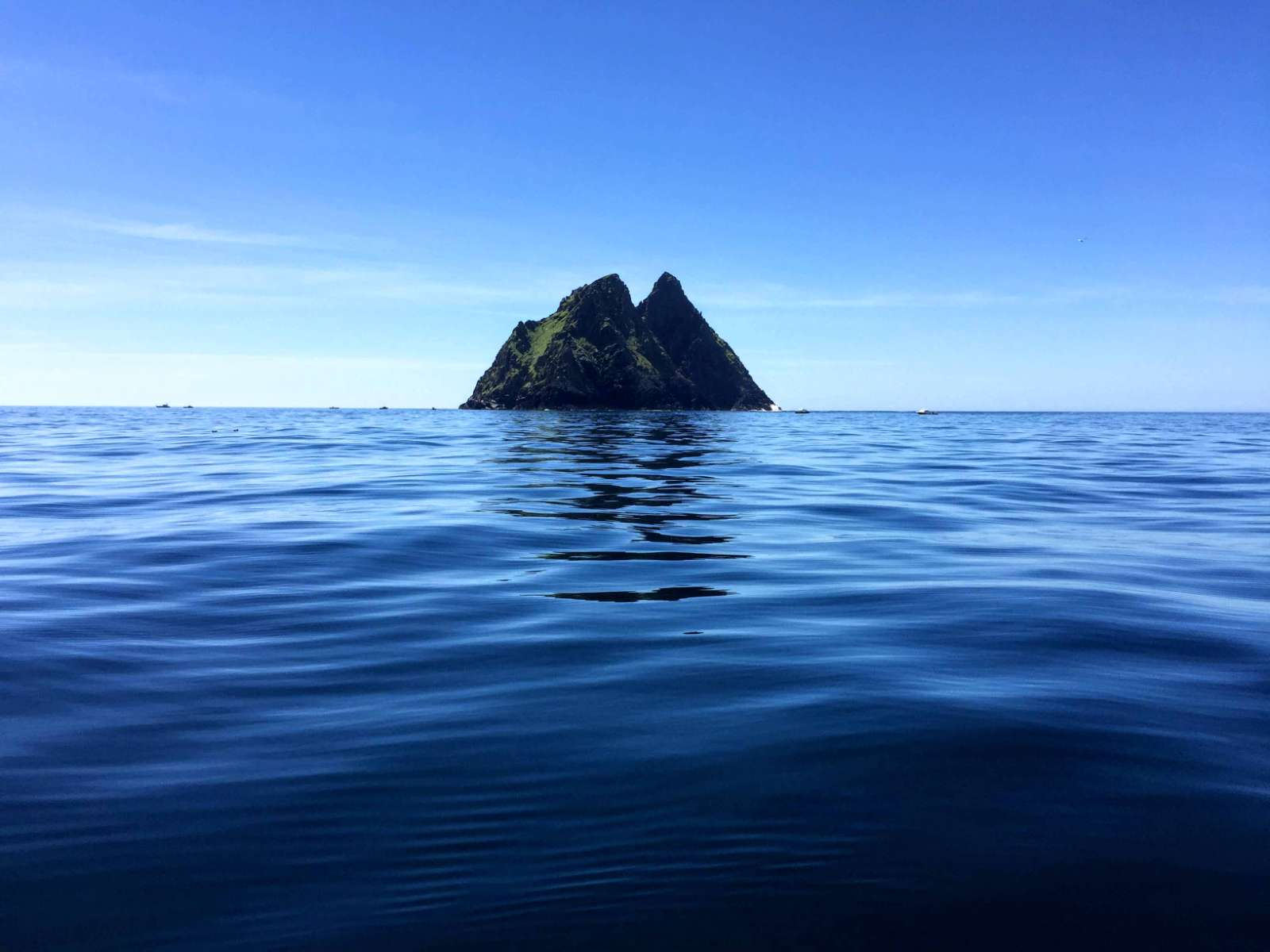
Skellig Michael, or Sceilg Mhichíl in Irish, is an island in the Atlantic Ocean, about 12 km off the Iveragh Peninsula in County Kerry. This page covers the main facts about the island and its history.
- Height. 218 metres at the highest point.
- Monastery. Founded around the 6th century.
- Buildings. Six beehive huts, two oratories and a church.
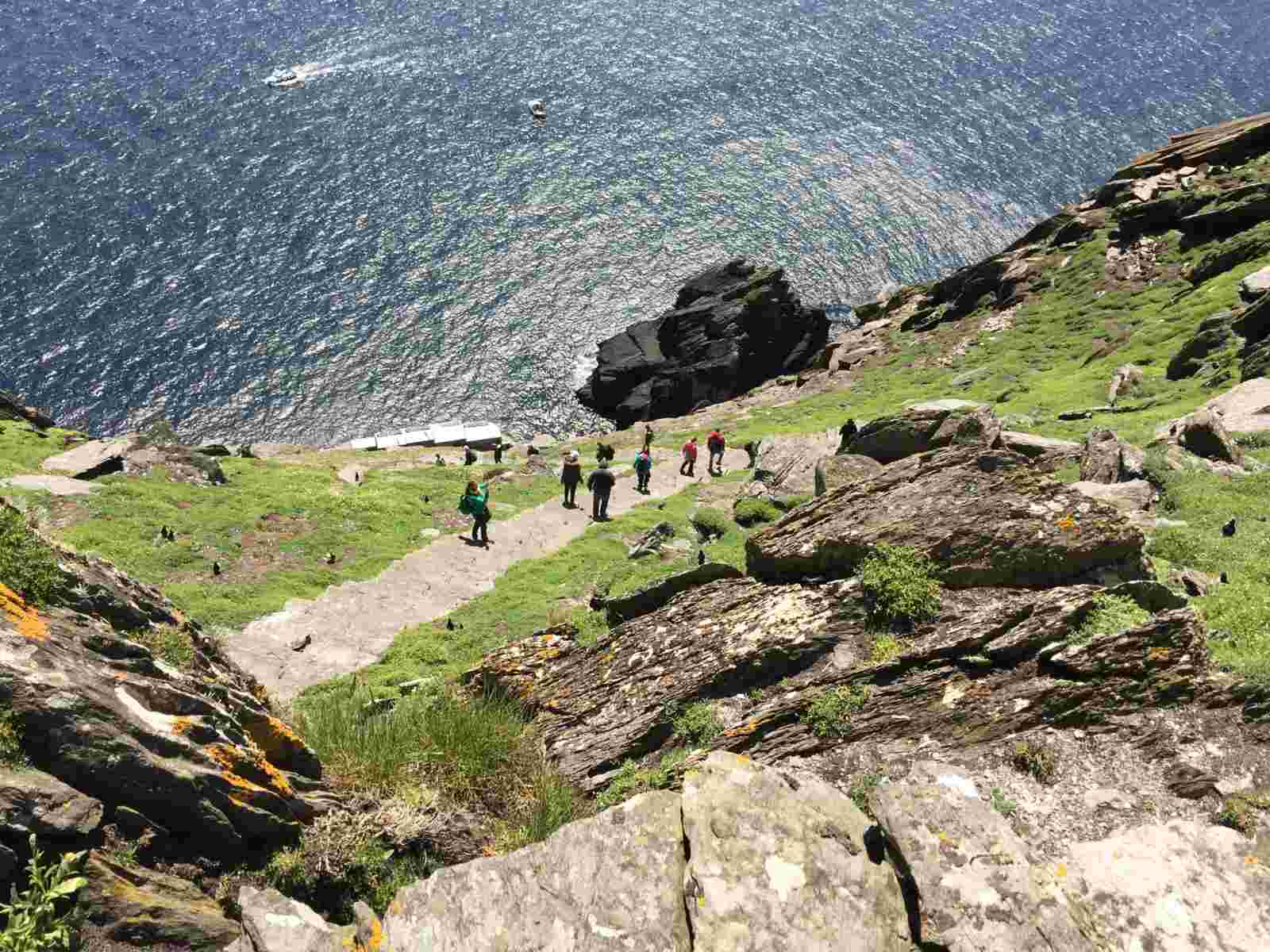
- Steps. 618 stone steps from the landing to the monastery, with no handrails.
- The monks left. In the late 12th or early 13th century, for Ballinskelligs on the mainland.
- UNESCO. A World Heritage Site since 1996.
- Lighthouses. Two, finished in 1826. The lower one still works.
- Films. Star Wars The Force Awakens and The Last Jedi.
- Wildlife. Puffins, gannets, other seabirds and grey seals.
The island has two peaks, with the monastery on the lower north-east peak and a small hermitage on the higher South Peak.
History
The monastery
The monastery was founded around the 6th century, and tradition says its founder was Saint Fionán. The earliest written record of the monastery is from the 8th century and notes the death of Suibhne of Skellig.
The monastery is on a sheltered part of the north-east peak, about 180 metres above sea level. Early Irish monks often chose remote places like this because they wanted a simple life of prayer, away from other people. The community was small, with never more than about 12 monks and an abbot.
The Viking raid of 823
In 823 Vikings raided the monastery and took the abbot, Eitgal, who died of hunger while he was held captive.
There were other raids, but the monks stayed on the island. They lived there until the late 12th or early 13th century, when the community moved to Ballinskelligs on the mainland. Pilgrims kept visiting the island after the monks left, through the Middle Ages and into modern times.
The 618 steps
The monks built stone steps up from the sea, and today 618 steps lead from the landing place to the monastery. Many are worn smooth from use, and there are no handrails.
Read how to prepare for the climb up the steps.
Buildings
Beehive huts (clocháns)
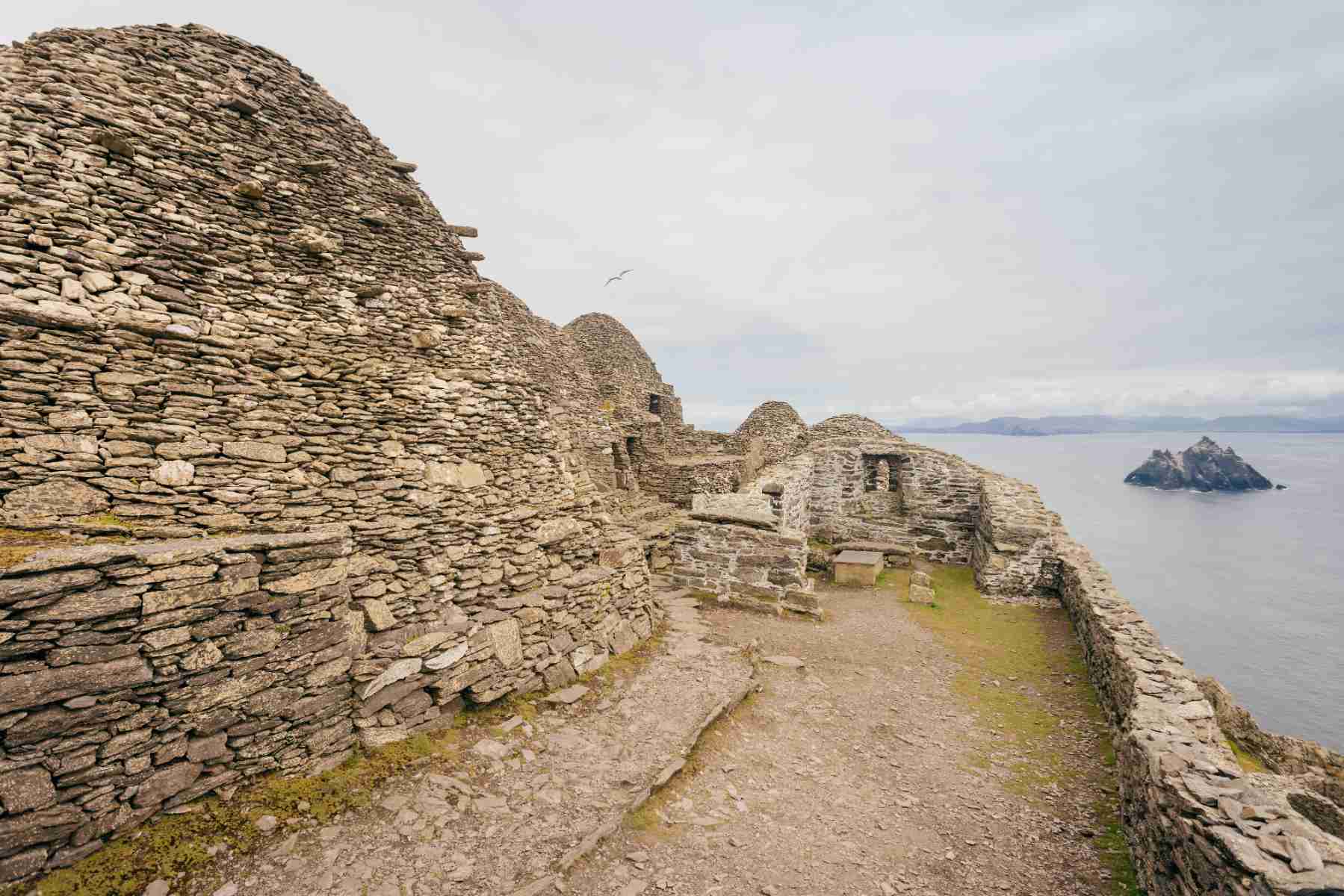
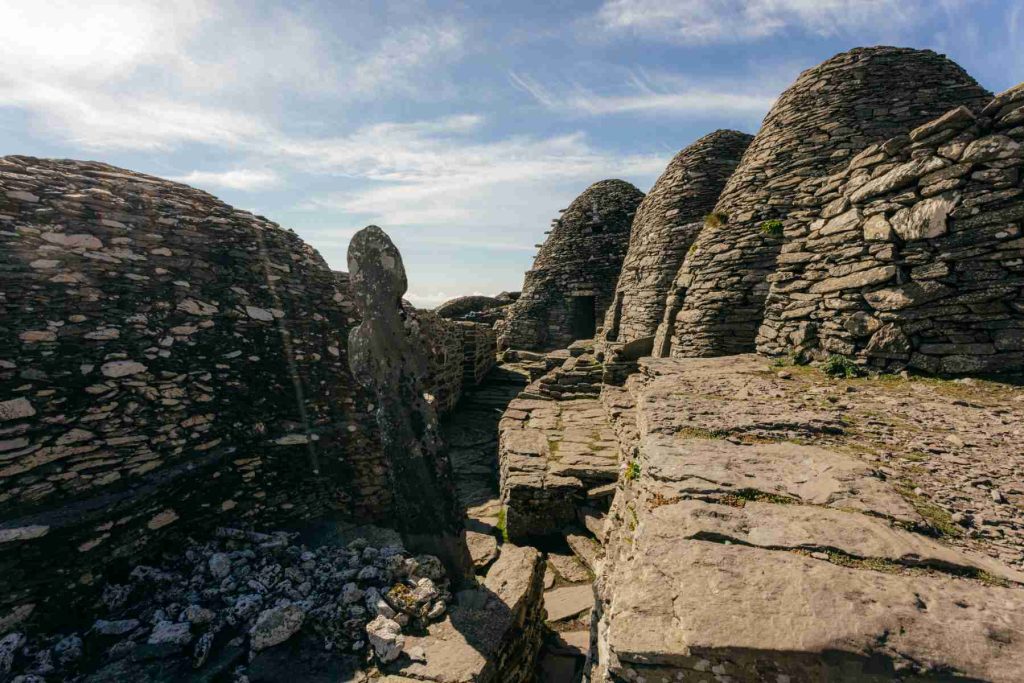
The monks lived in six stone huts shaped like beehives, which in Irish are called clocháns.
The huts are built of dry stone with no mortar, and the builders used a method called corbelling. Each layer of stone sits slightly inside the layer below, so the walls lean in as they rise.
A single stone closes the top of each hut, and this design keeps the rain out. From outside the huts look round, but inside the rooms are roughly square.
Corbelling is much older than the monastery and was used in stone tombs thousands of years earlier.
Five of the six huts are in good condition, and one has partly fallen in.
Oratories and church
The monastery also has two oratories, which are small stone chapels for prayer shaped like an upturned boat. Their stone roofs are built in a similar way to the huts, but one of the two oratories is in poor repair. As well as the huts and oratories, the monastery has a church.
Read what daily life was like for a Skellig monk.
South Peak
The hermitage on the South Peak
A small hermitage sits on the South Peak, away from the main monastery, and a few monks went there to pray in even greater isolation.
The route is a narrow path along the cliff edge with steep drops, and there are only a few stone steps and handholds.
Its stone walls give only basic shelter from the weather.
The hermitage is mostly closed to the public because the route is dangerous, but from the monastery you can look up at the South Peak.
Heritage
UNESCO World Heritage Site
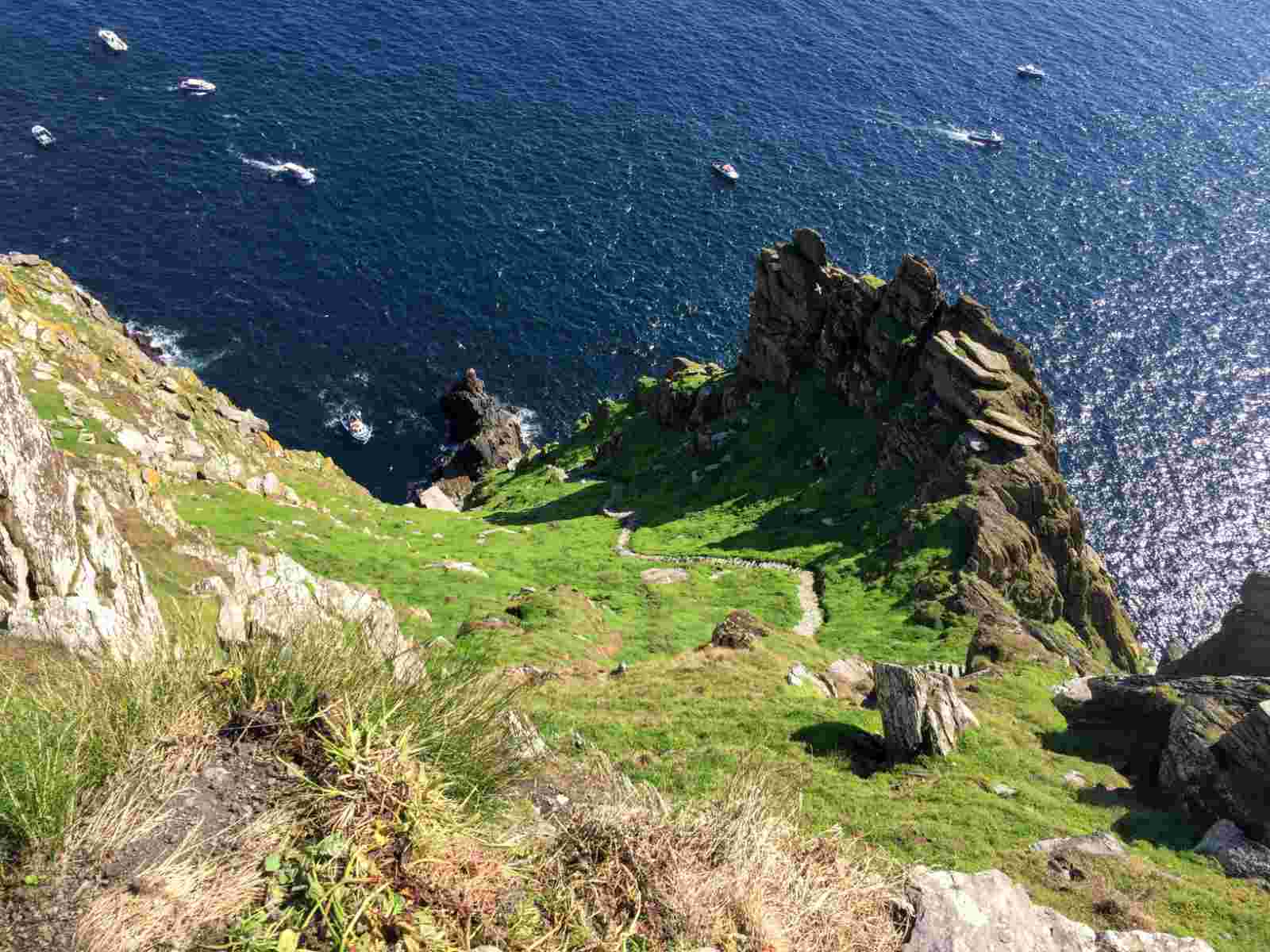
Skellig Michael was added to the UNESCO World Heritage List in 1996. UNESCO described it as an early religious settlement built on purpose on a pyramid-shaped rock in the ocean.
UNESCO also said the site shows the extremes of early Christian monastic life, which was found across North Africa, the Near East and Europe. The monastery has changed little since the monks left, so it still shows how they lived.
The Office of Public Works (OPW) looks after the island, managing visitor access and carrying out conservation work, which began in 1978. The OPW also limits how many people can land each day.
Read our guide to why Skellig Michael is a UNESCO World Heritage Site.
Maritime history
The lighthouses
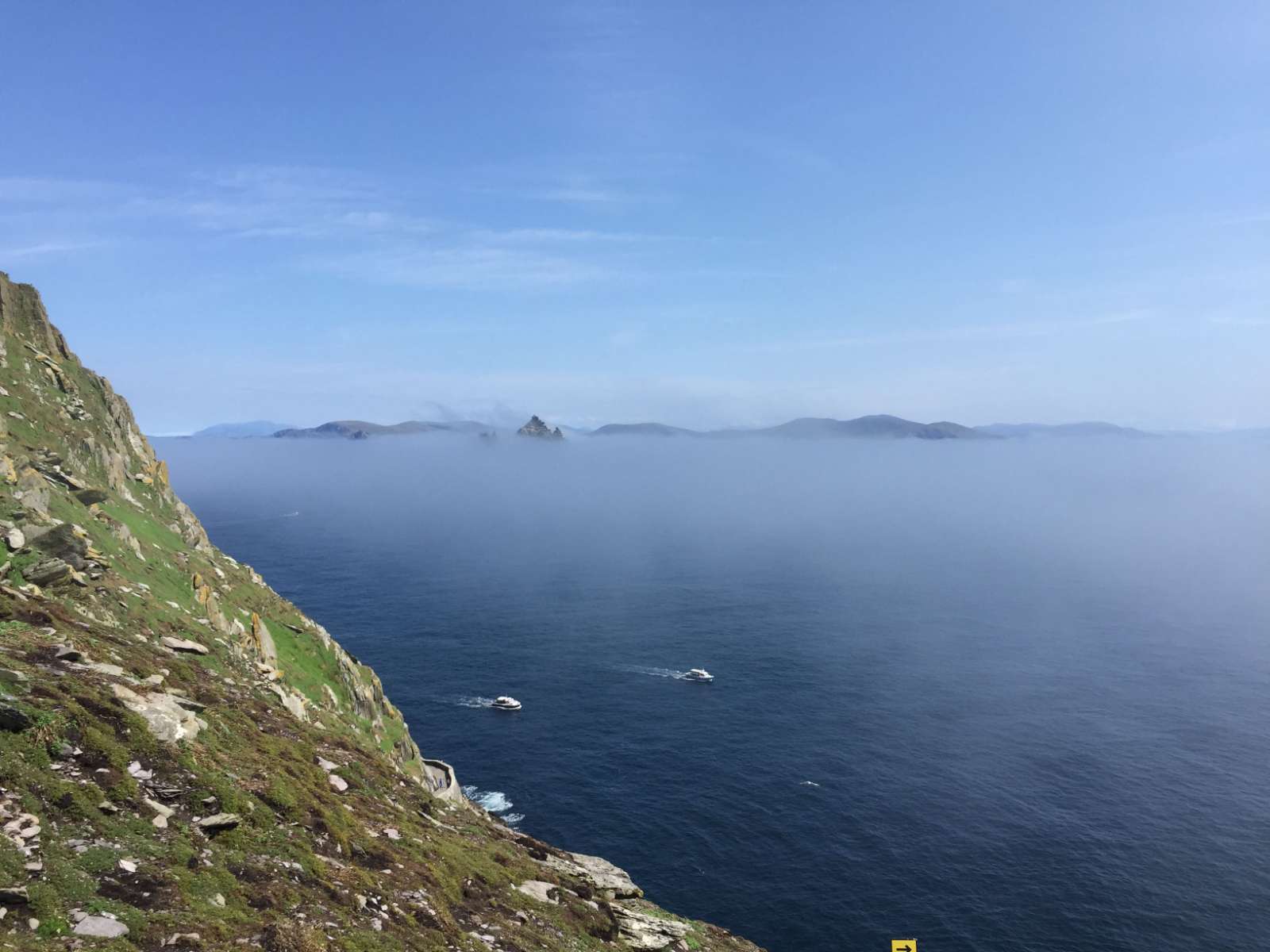
In the early 1800s more ships were sailing past the Kerry coast, and the rocks around Skellig Michael were a danger to them. Two lighthouses were built at different heights on the Atlantic side of the island, and the work was finished in 1826.
Building them was hard work, because all the materials came by boat and boats can only land in calm seas.
The keepers’ road, a narrow stone path built along the cliff face, links the two lighthouses.
Keepers lived on the island and kept the lights working in all weather. The upper lighthouse is no longer used. The lower lighthouse was automated in 1987 and the keepers left the island, but its light still works today.
Read the history of the Skellig Michael lighthouses.
Film
Star Wars and Ahch-To
Skellig Michael appears in Star Wars as the island of Ahch-To, where Luke Skywalker, played by Mark Hamill, has gone to live alone.
Director J.J. Abrams filmed on the island for the Star Wars film The Force Awakens (2015). Director Rian Johnson used it for more scenes in The Last Jedi (2017), in which the beehive huts appear as Luke’s home.
Some island scenes were filmed at other places in Ireland, including Ceann Sibéal on the Dingle Peninsula and Malin Head in County Donegal.
Filming on Skellig Michael was supervised, and the crews had to follow conservation rules to protect the buildings and the wildlife.
Read which parts of the films were shot on Skellig Michael.
Nature
Wildlife
Skellig Michael and Little Skellig are a Special Protection Area for birds under European Union law.
Puffins
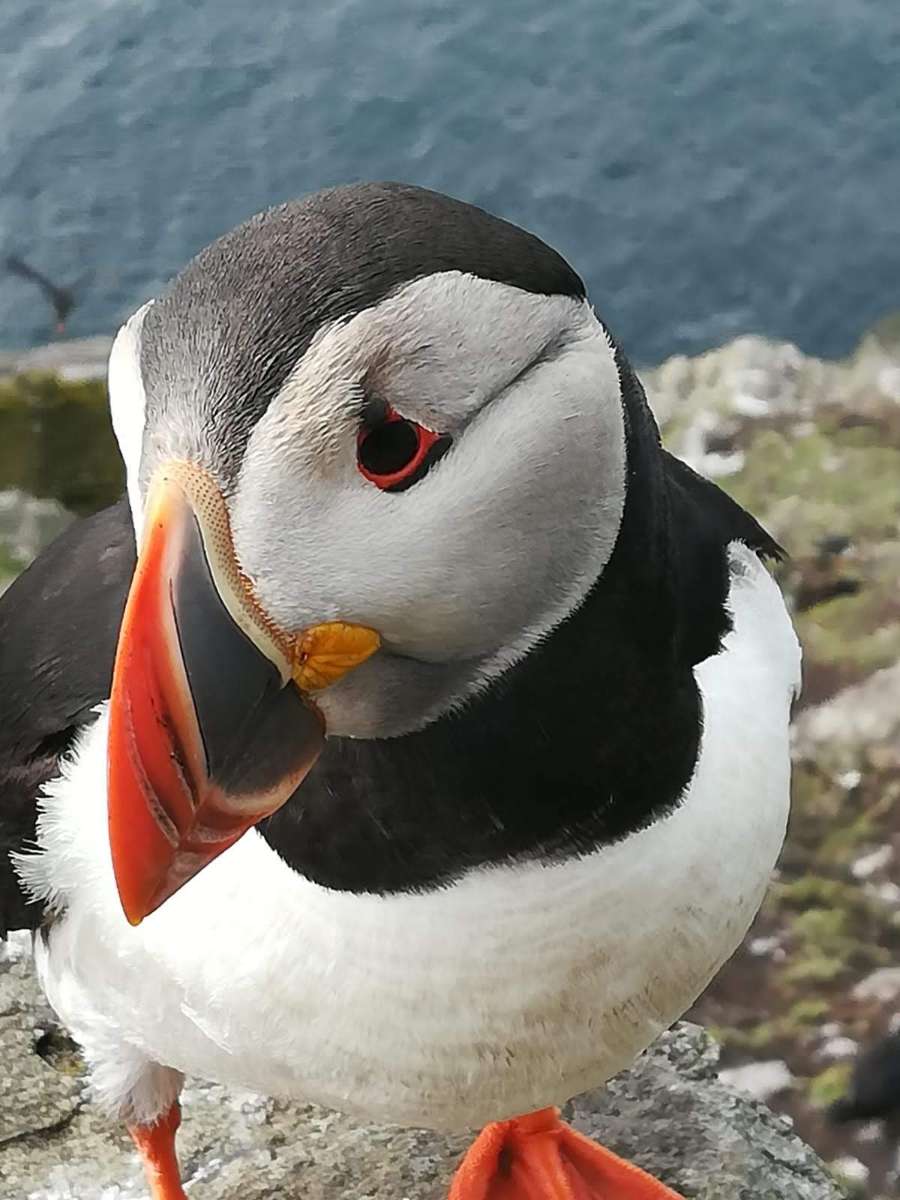
Puffins spend the winter at sea and come back to the islands in spring. They are on the islands from about late April to early August, with most there in May, June and July.
Puffins are black and white with colourful beaks. Read our puffin guide for the best times to see them.
Gannets on Little Skellig
No one lives on Little Skellig, the smaller of the two islands, but it has one of the biggest gannet colonies in the world. Gannets are large seabirds that dive into the sea from a height to catch fish.
Other seabirds
Storm petrels, Manx shearwaters, razorbills, guillemots, kittiwakes and fulmars also nest on the islands, each kind in its own part of the cliffs.
Read our guide to the birds of the Skellig Islands.
Seals, whales and sharks
Grey seals often rest on the rocks near the island. Basking sharks are sometimes seen at the surface in summer, but they are filter feeders and do not harm people.
Minke whales, fin whales and dolphins are seen at some times of year, but sightings are never guaranteed.
Plan your visit
Visiting Skellig Michael
You can only get to Skellig Michael by boat, and all our tours leave from Portmagee. The crossing takes about 45 minutes to 1 hour, depending on the sea. There are two ways to see Skellig Michael with us.
Landing tour
On the Skellig Michael landing tour you land on the island and have about 2.5 hours there. You can climb the 618 steps to the monastery and see the beehive huts up close.
- The tour takes about 5 to 6 hours in total.
- It is for ages 14 and over, and you need good fitness.
- Adults pay €170, and there are no student or group rates.
- It runs from mid-May to the end of September, weather permitting.
- The OPW limits landing numbers each day, so book early.
- Landing is never guaranteed, because it depends on the sea.
Boat tour with no landing
The Skellig Islands boat tour circles Skellig Michael and Little Skellig but does not land.
- The tour takes about 2.5 to 3 hours.
- It suits all ages.
- It runs from April to October, weather permitting.
- Adults pay €70. For children’s prices, email info@skelligmichael.ie.
This tour is a good choice for young children or if you do not want to climb. It is also a backup if landing is full or cancelled.
Before you go
- Book early. June, July and August are the busiest months.
- Check the weather. Rough seas often cancel trips, and if we cancel for weather, we offer another date or a full refund.
- Bring what you need. There are no toilets, shelter, bins or shops on the island.
- Dress for the weather. Bring warm, waterproof clothes and wear boots or shoes with good grip.
- Arrive early. Be at Portmagee at least 30 minutes before departure to park and check in. Parking in the village is free.
- Stay nearby. Portmagee has guesthouses, hotels and restaurants.
See our Skellig tours FAQ for more answers.
 Book your tour