
Portmagee is a small fishing village at the western end of the Iveragh Peninsula in County Kerry. About 123 people live there.
It is the main departure point for boats to the Skellig Islands, and all our Skellig tours leave from here. This guide to Portmagee covers getting here, parking, where the boats leave from and what to do in the village.
Getting to Portmagee
Portmagee is about 16 km (10 miles) off the main N70 road. The R565 brings you here from Cahersiveen or Waterville.
The road ends in the village, unless you cross the bridge to Valentia Island. Traffic is usually light, but the roads are narrow.
Driving times to Portmagee are roughly as follows.
- From Killarney, about 1 hour 20 minutes.
- From Cork, about 2.5 hours.
- From Shannon Airport, about 3 hours.
- From Dublin, about 4.5 hours.
Country roads in Kerry can take longer than a map suggests, so leave extra time.
Parking and check-in
There is free parking in the village, a short walk from the pier.
Please arrive at least 30 minutes before your departure time. This gives you time to park and check in.
Where the boats leave from
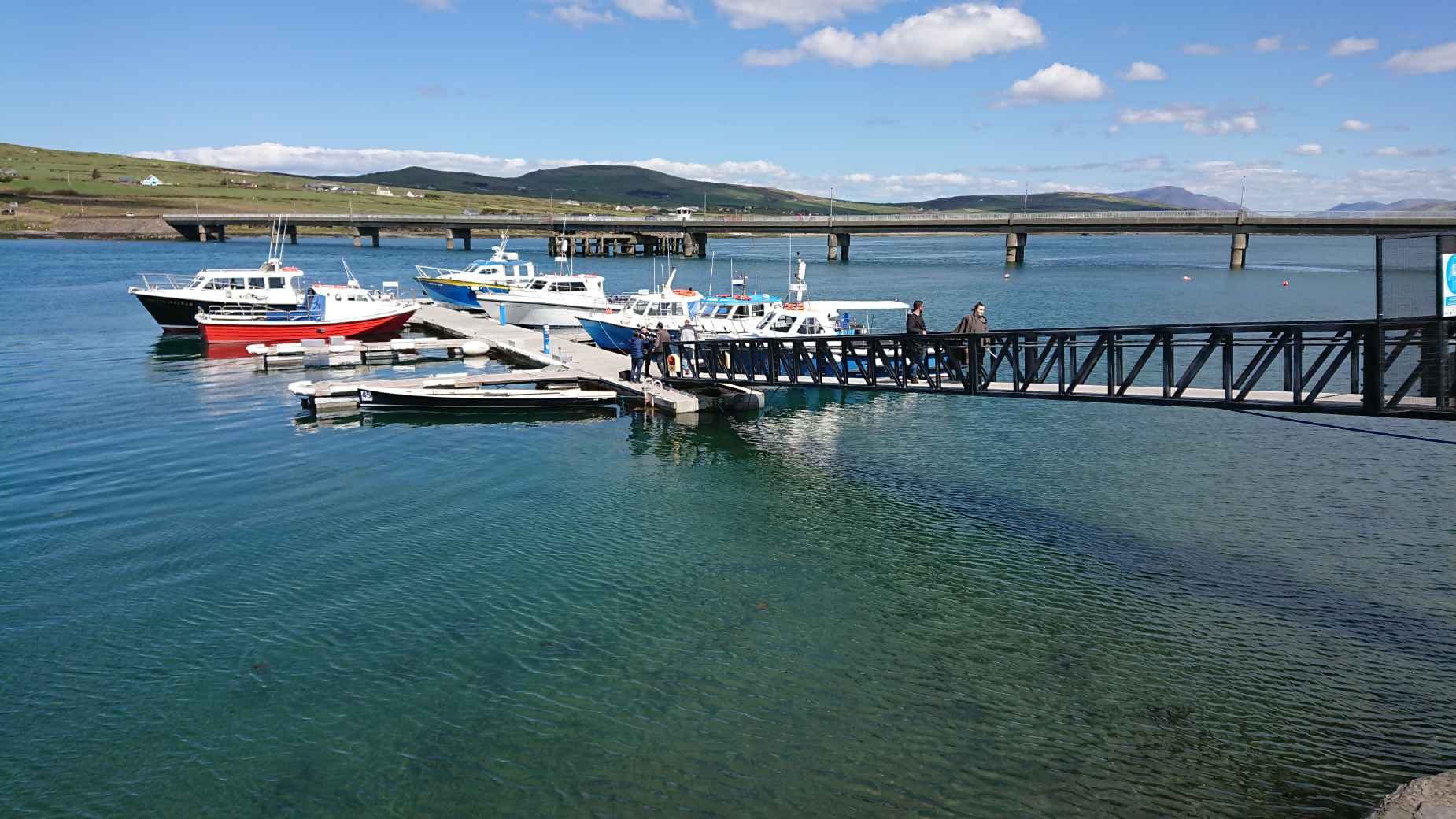
Our boats leave from Portmagee Marina, where we are based. Check in with us there when you arrive.
Portmagee is still a working harbour. You will see fishing boats unloading their catch next to the tour boats.
When the weather is bad
All trips depend on safe sea conditions. If the swell is too high, the boats do not go out, however far you have travelled.
If we cancel for weather, we offer you another date or a full refund. On those days, many visitors go to the Kerry Cliffs or drive the Skellig Ring instead.
Things to do in Portmagee
Walk across the bridge to Valentia Island
The Maurice O’Neill Memorial Bridge links Portmagee to Valentia Island. It opened in 1970. Before that, the only way across was by ferry.
Walk onto the bridge for a good view of the village and the harbour.
Take the harbour tour
Our Portmagee harbour tour takes about an hour and is open to all ages. You may see seals and seabirds, and the boat passes under the Valentia Island bridge.
Visit the Kerry Cliffs
The Kerry Cliffs are a short distance from the village. They rise over 300 metres above the sea. On a clear day you can see the Skellig Islands from the top. You can also see the cliffs from the sea on our Puffin Island and Kerry Cliffs boat trip.
See the old monastery on Illaunloughan
Illaunloughan is a tiny island just off the coast near the bridge. It has the ruins of an 8th-century monastery.
It shows that the Skelligs were not the only place monks settled. There were small religious communities all along this coast.
Drive the Skellig Ring
The roads around Portmagee are known as the Skellig Ring. It is an extension of the Ring of Kerry.
Many visitors miss it because the roads are narrower. Take your time and watch for oncoming traffic.
Stay the night
If you have time, stay overnight. The village is much quieter in the evening, after the day visitors leave.
How Portmagee got its name
The village is named after Captain Theobald Magee, an 18th-century smuggler. He had been an officer in the army of King James II.
Magee used Portmagee as his base. He brought in French wine, Spanish brandy, Portuguese cloth, tea and tobacco without paying the heavy taxes of the time.
The many inlets on this coast made it hard for customs officers to catch him. He died in a monastery in Lisbon in 1724.
The village’s Irish name, An Caladh, means “the ferry”. It comes from its old role as the crossing point to Valentia Island.
Portmagee and the Skellig Islands
Skellig Michael is about 12 km off the coast of the Iveragh Peninsula. It has been a UNESCO World Heritage Site since 1996.
Monks lived on the island from around the 6th century. Read about their daily life in our post on life as a Skellig monk.
If you are planning a visit, our guide to planning a Skellig Michael trip covers booking, what to bring and the weather.
Life in the village
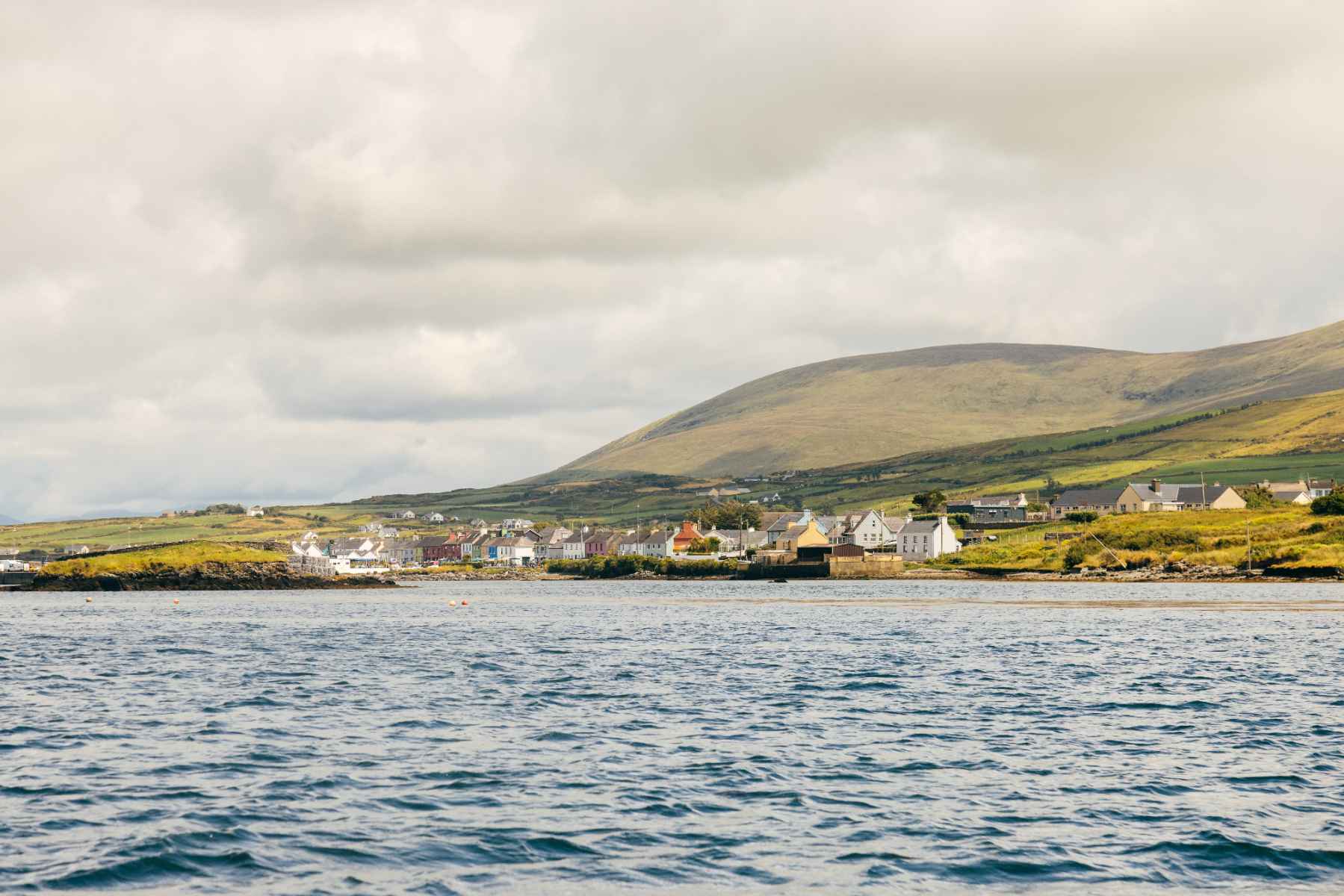
Portmagee is a quiet, working village. The houses on the main street are painted blue, red, yellow and green.
In winter the Atlantic gales can be strong. In summer the village fills with visitors from all over the world.