
Skellig Michael has been a UNESCO World Heritage Site since 1996. This guide explains why the island was listed, who looks after it and what the listing means for your visit.
For the story of the monks, the lighthouses and the films, see our page on Skellig Michael history and facts.
What UNESCO World Heritage status means
UNESCO is the United Nations body for education, science and culture, and it keeps a list of World Heritage Sites around the world.
To be listed, a place must have what UNESCO calls “outstanding universal value”. This means it matters to people everywhere, not only to the country it is in.
Each site is listed under one or more set criteria, and some criteria cover culture while others cover nature.
When and why Skellig Michael was listed
UNESCO added Skellig Michael to the World Heritage List in 1996 for its cultural value, under criteria iii and iv.
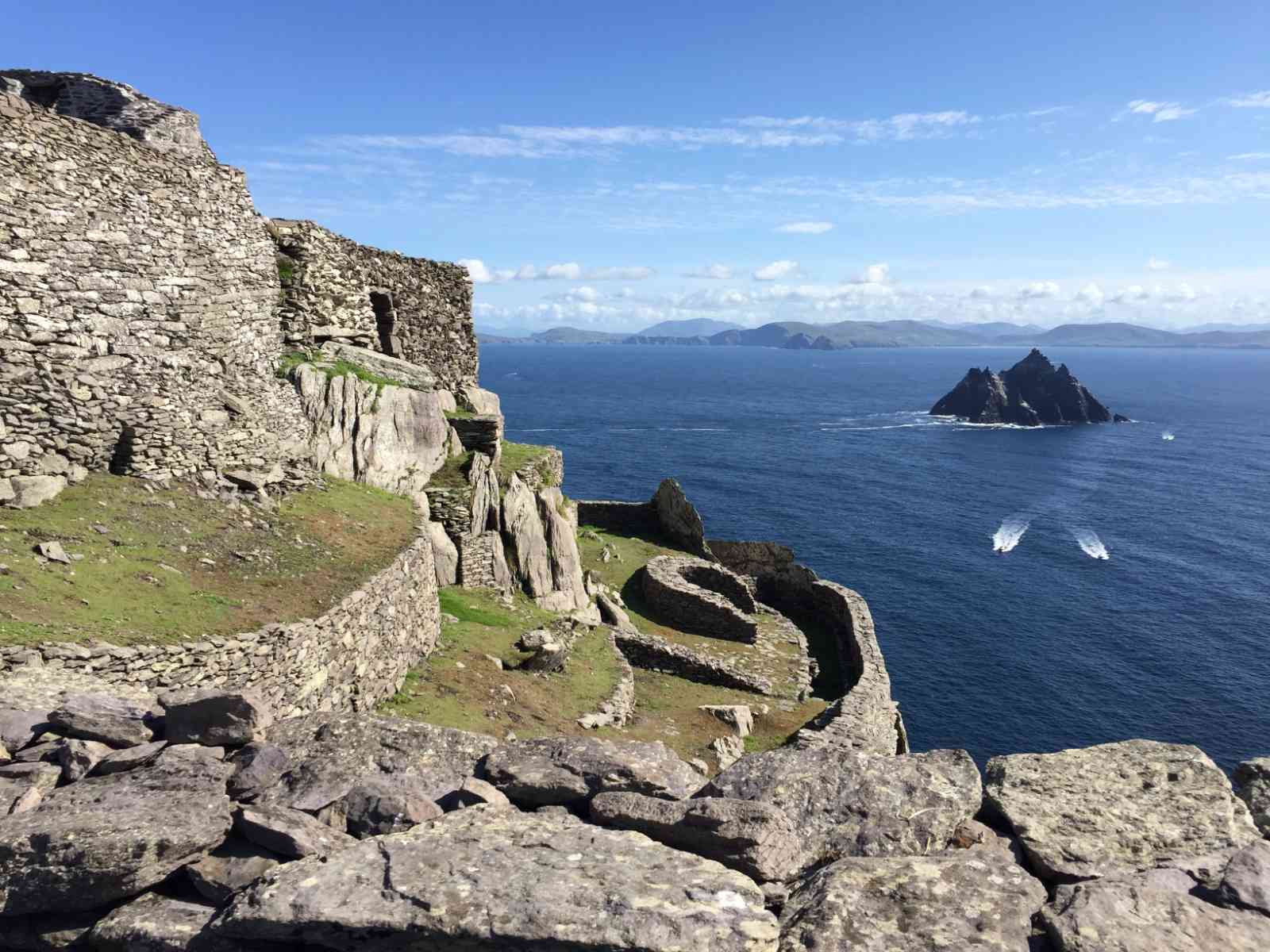
The island is about 12 km off the Iveragh Peninsula in County Kerry and is 218 metres high. Monks lived there from at least the 6th century until the late 12th or early 13th century.
It shows how early Christian monks lived
Criterion iii covers places that give exceptional evidence of a culture, whether that culture still exists or has gone.
On Skellig Michael, that culture is a strict form of Christian monastic life, which was found in early medieval Europe and North Africa. Monks chose to live in remote places with very little, so they could spend their lives in prayer.
The monastery is still largely intact, and both the island’s remote position and the strength of the stonework have helped it last.
It is an outstanding example of a type of building
Criterion iv covers outstanding examples of a type of building or landscape that shows an important stage in human history.
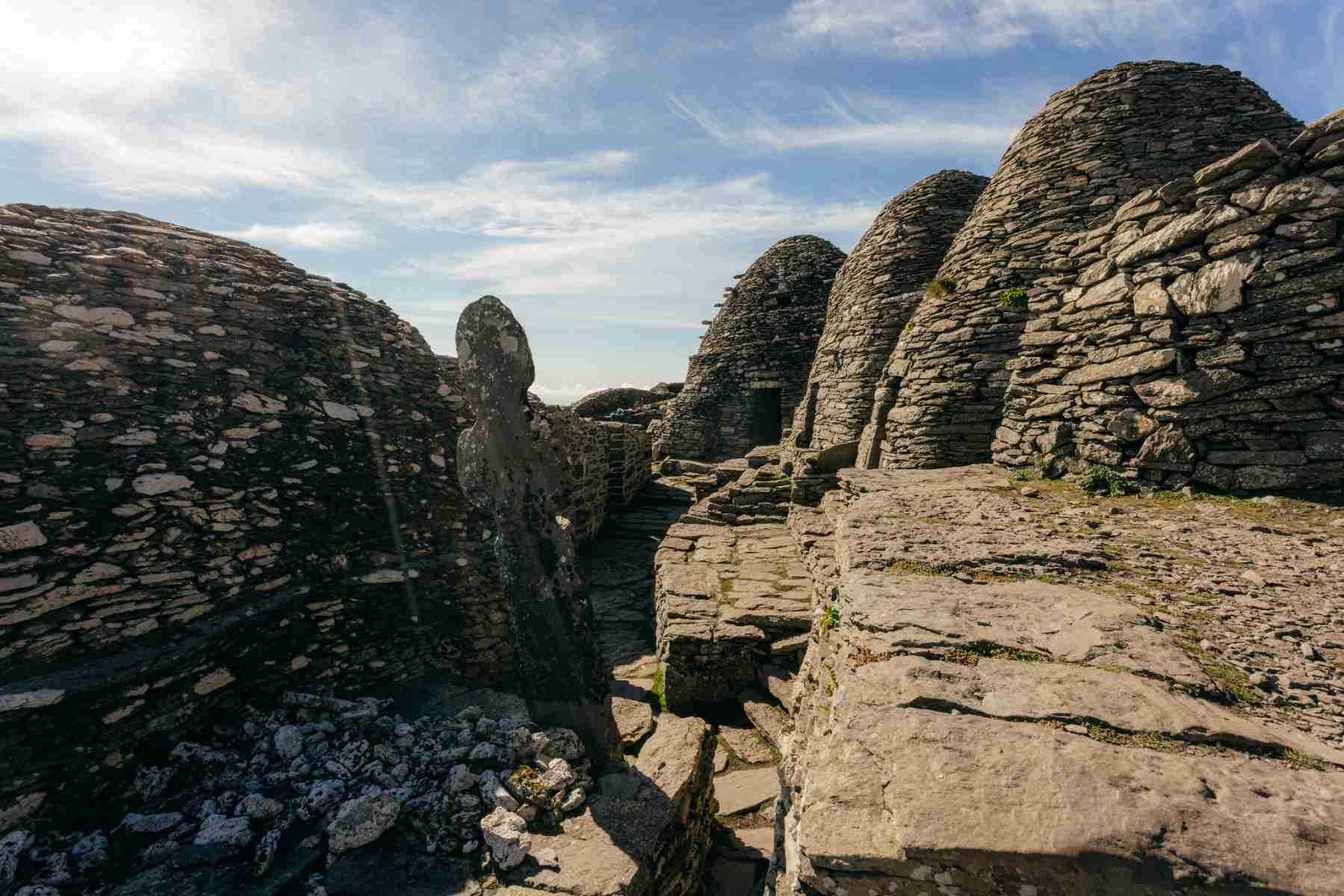
On Skellig Michael, this is the dry-stone building, which the monks did without mortar using a method called corbelling. Each layer of stone sits slightly inside the layer below until a single stone closes the top.
The beehive huts (clocháns) and the two oratories are built this way and have stayed largely intact through centuries of Atlantic weather.
Who protects Skellig Michael
The Office of Public Works (OPW) looks after the monastery and the other remains. The National Parks and Wildlife Service (NPWS) also sets rules for the island.
Every summer a team of stonemasons and archaeologists stays on the island to carry out repairs using traditional methods and materials.
Tour boats, including ours, work within the rules set by the OPW and the NPWS.
A protected area for seabirds
The Skelligs are also a Special Protection Area (SPA) because of their seabird colonies.
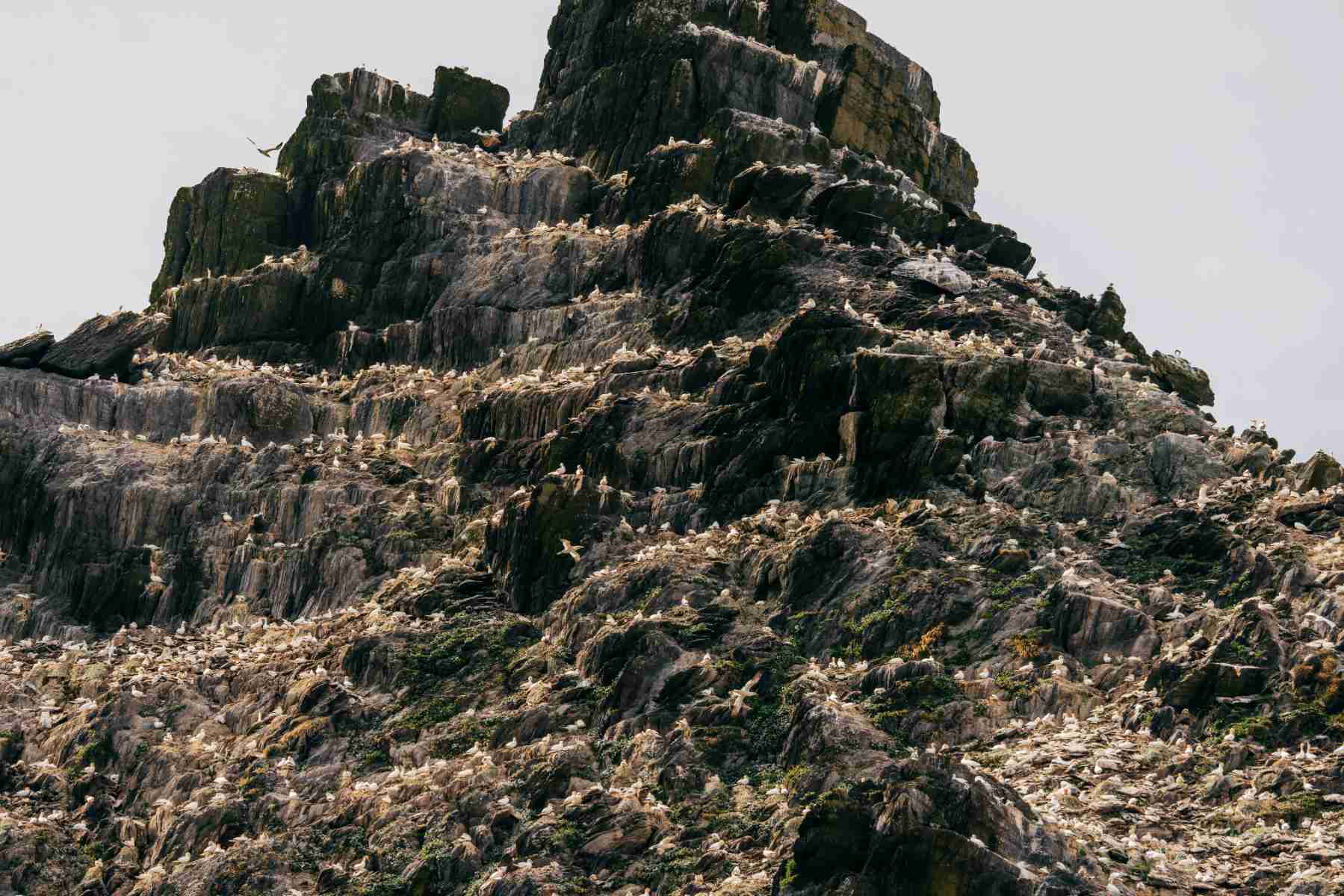
Little Skellig has one of the biggest gannet colonies in the world. From a distance the island looks white, but the colour comes from the birds and their droppings, not the rock.
On Skellig Michael, puffins nest in burrows in the soft soil on the slopes from about late April to early August. Manx shearwaters, storm petrels, kittiwakes and fulmars also nest on the island.
You can read more in our guide to the birds of the Skellig Islands.
What the listing means for your visit
Landing numbers are limited
The OPW limits the number of people who can land on Skellig Michael each day to protect the site. Because of this limit, book the Skellig Michael landing tour early.
Landing only happens in season and in safe seas
Landing is only allowed from mid-May to the end of September, and even then it depends on the sea.
The Atlantic swell often makes it unsafe to land at the pier, and when that happens the trip is cancelled. If we cancel for weather, we offer another date or a full refund.
The climb is steep
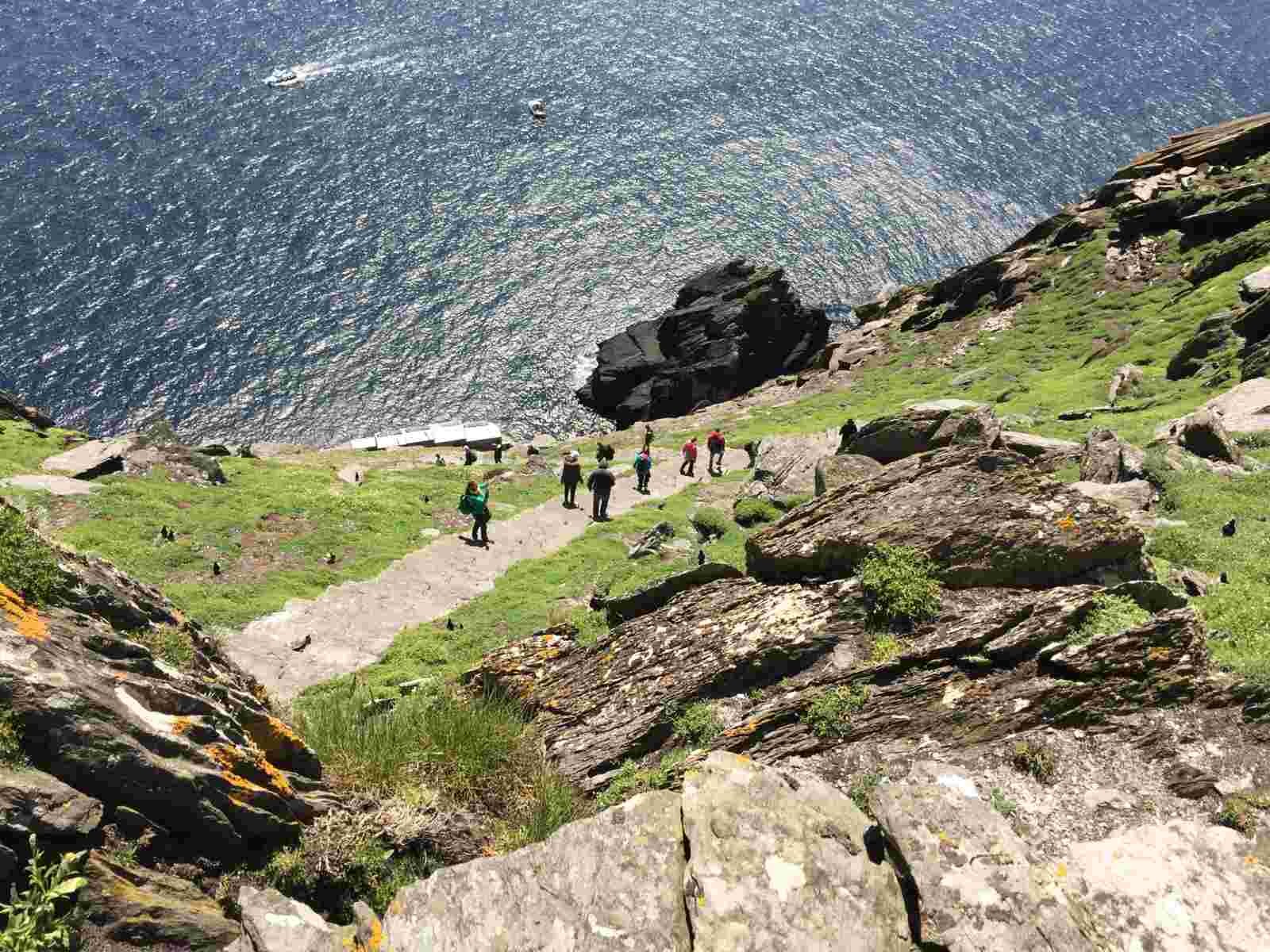
There are 618 stone steps up to the monastery with no handrails, and the path is steep, uneven and open to the weather.
You need good fitness and boots or shoes with good grip, and the landing tour is for ages 14 and over.
Read how to prepare for the 618 steps before you go.
Rules on the island
Visitors are asked to follow Leave No Trace principles, which include these main rules.
- Stay on the marked paths. Do not disturb nesting birds or their burrows.
- Take your rubbish home. There are no bins on the island, so carry everything back to the mainland.
- Leave everything as you find it. Do not take stones, plants or any other natural material from the island.
- Come prepared. There are no toilets, shelter or shops on the island.
If you cannot land
If landing is cancelled, or the climb is too much for you, you can still see the islands from the sea.
Our Skellig Islands boat tour circles Skellig Michael and Little Skellig without landing, takes about 2.5 to 3 hours and suits all ages.
From the boat you can see the seabird colonies and the terraces where the monks built their monastery.