
For a small group of 6th-century monks in Ireland, Skellig Michael wasn't just a scenic backdrop; it was home. Choosing to live 12km offshore in the middle of the Atlantic Ocean wasn't about the view. It was about finding the ultimate solitude. These early Christian settlers were looking for a place where they could be alone with their faith, far from the distractions of the mainland. What they created remains one of the most extraordinary monastic sites in the world.
The Morning Commute (Without the Car)
In the 6th century, getting to the island wasn't as simple as hopping on one of our modern tour boats. The monks used currachs: traditional Irish boats made of wooden frames covered in animal hides. Navigating 12km of unpredictable Atlantic swells in a leather boat required incredible skill and more than a bit of bravery.
Once they arrived, the hard work was only just beginning. There were no paths or easy landings. The monks had to carve their existence out of the vertical rock. To reach their monastery, which sits nearly 180 metres (600 feet) above sea level, they hand-carved over 600 stone steps into the cliffside.
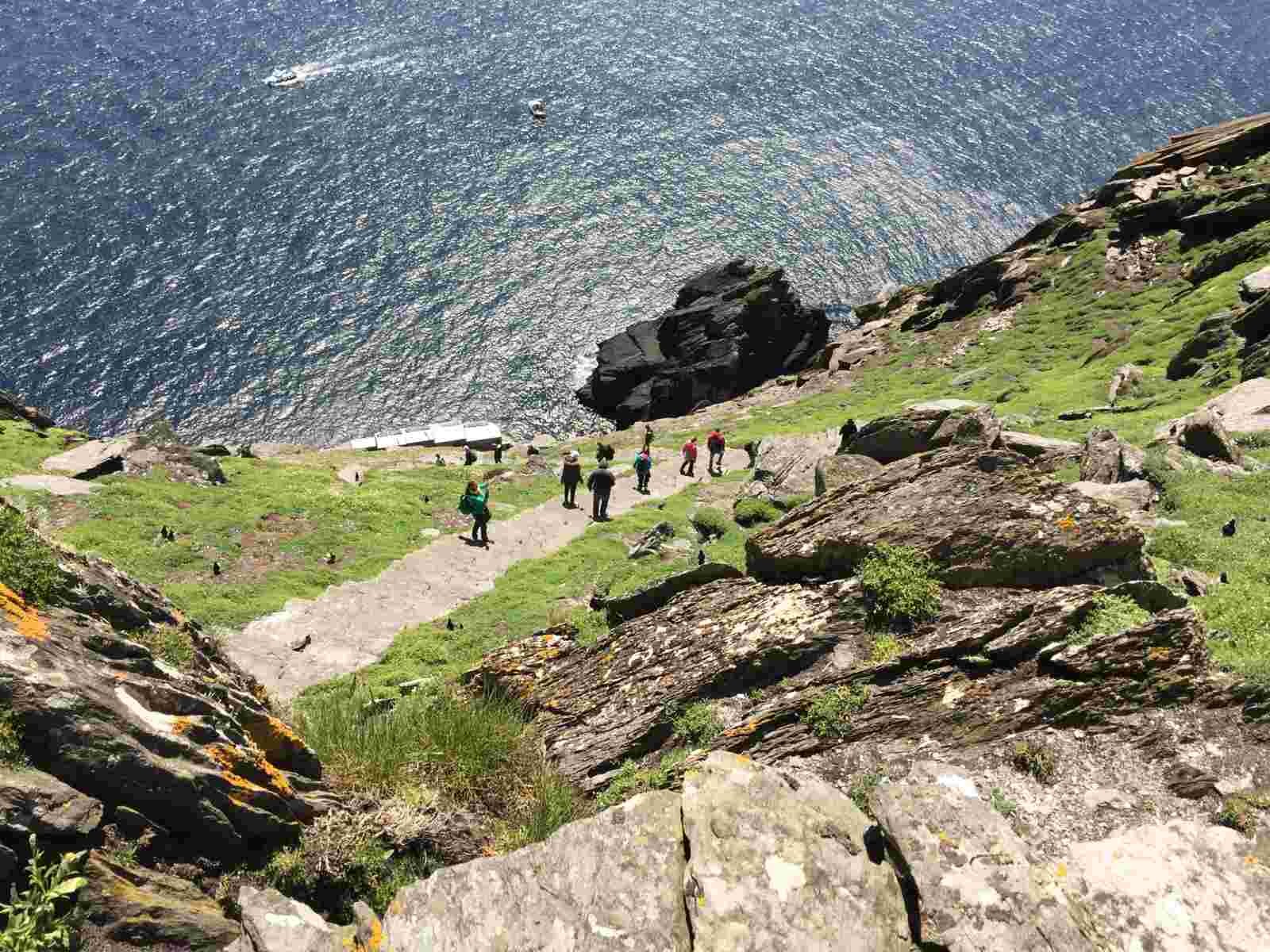
Every time a monk needed to head down to the water to fish or check their boat, they faced a steep, heart-pounding climb back up. Imagine doing that commute several times a day in heavy woollen robes, regardless of the wind or rain.
Meeting the Wailing Woman
As you make the climb yourself during one of our Landing Tours, you will encounter a famous landmark known as the "Wailing Woman." This is a large, standing rock formation that sits along the path. To the monks, landmarks like these were essential for navigation on the island, especially when the thick Atlantic fog rolled in and visibility dropped to a few feet.
The Wailing Woman has stood watch over the monks for centuries, and today, she greets the thousands of visitors who follow in those ancient footsteps. It serves as a reminder that while the island feels wild, it was a deeply organised and spiritual landscape for those who lived there.
Engineering the Beehive Huts
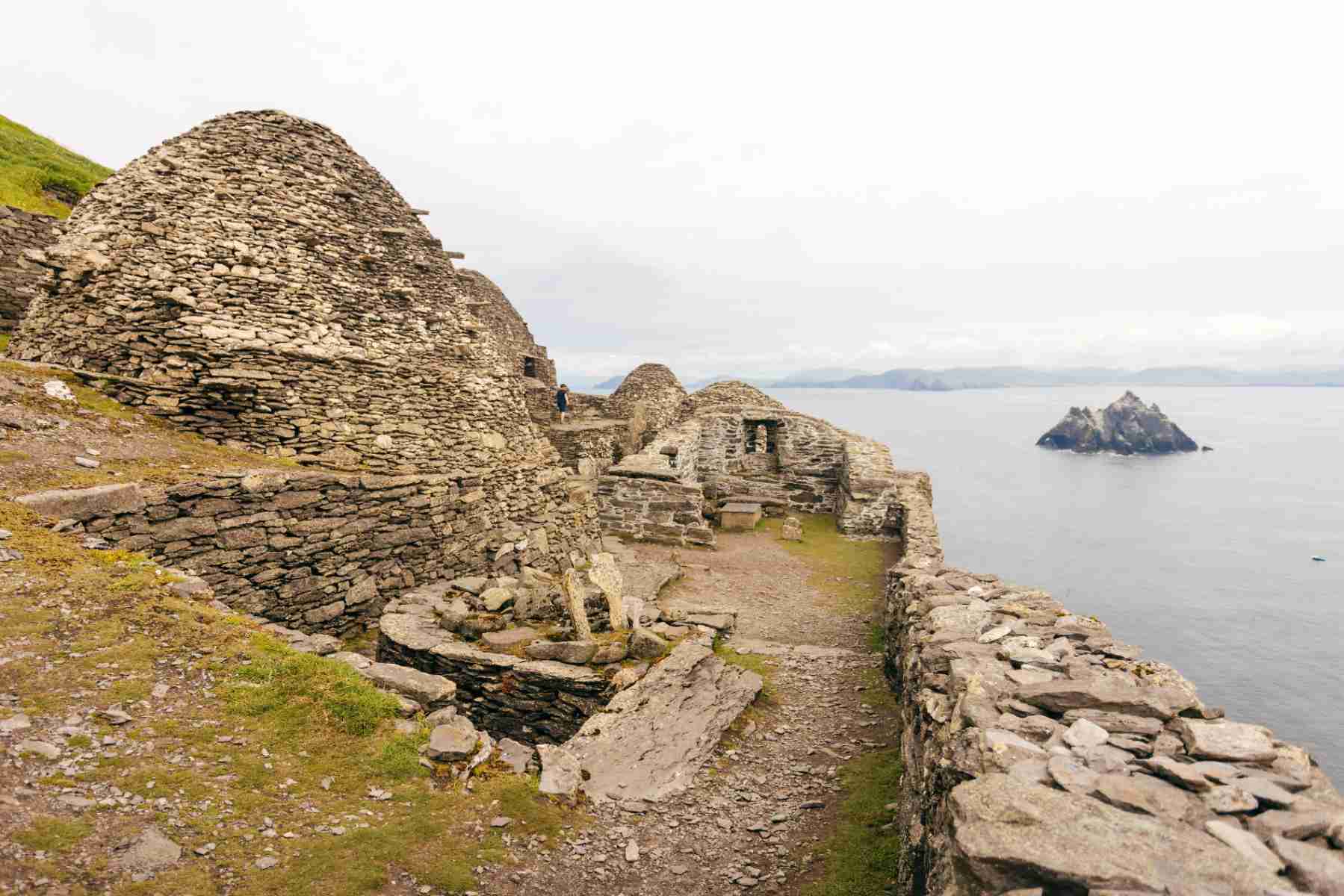
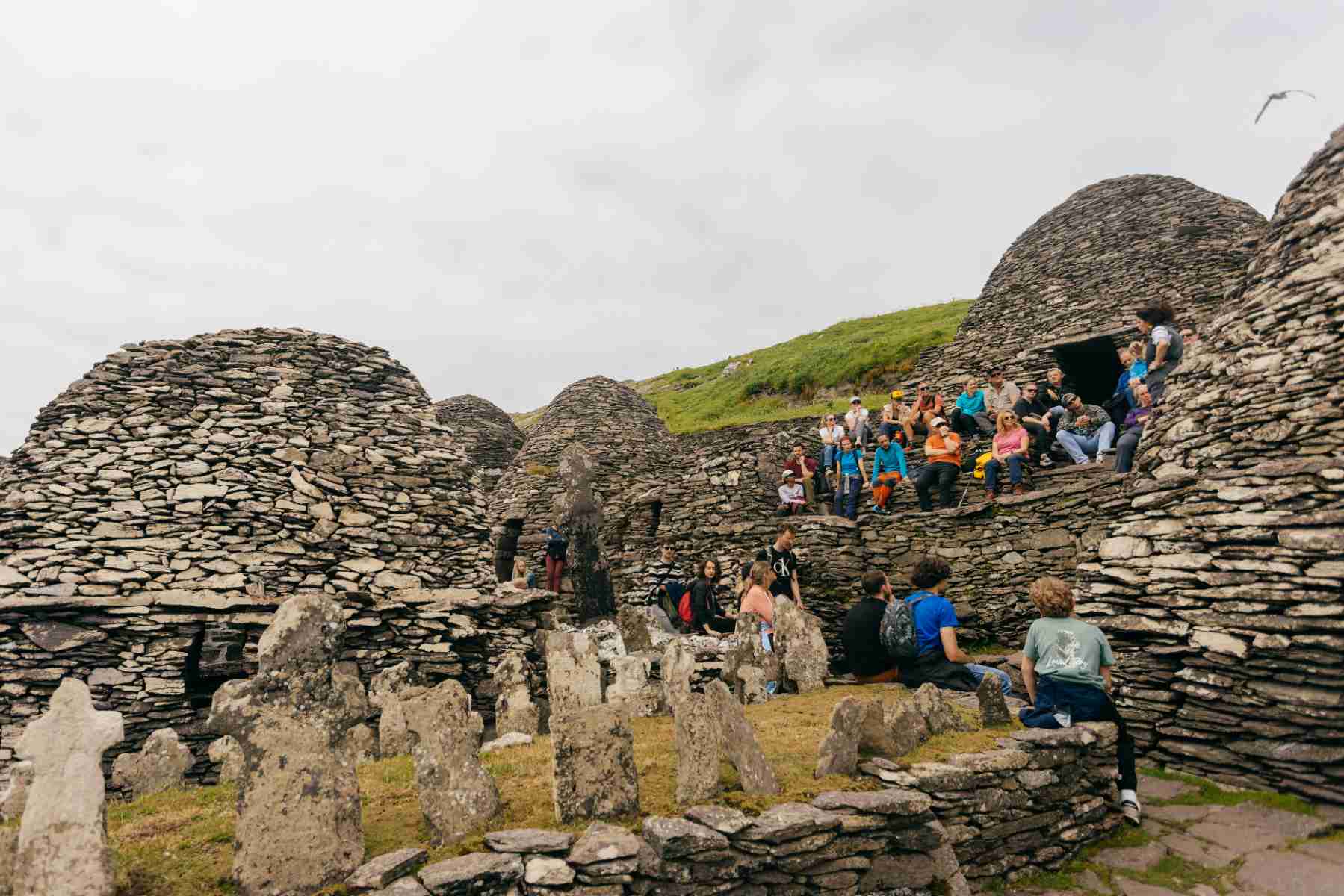
At the top of the climb sits the Skellig Michael monastic site, a collection of stone buildings that look like they belong in a fantasy novel. These are the "clocháns," or beehive huts.
What makes these structures so incredible is the technique used to build them: dry stone corbelling. The monks didn't use a single drop of mortar or cement. Instead, they carefully layered flat stones, each one tilting slightly outward to let the rain run off, and each layer stepping inward until the roof met in a single stone at the top.
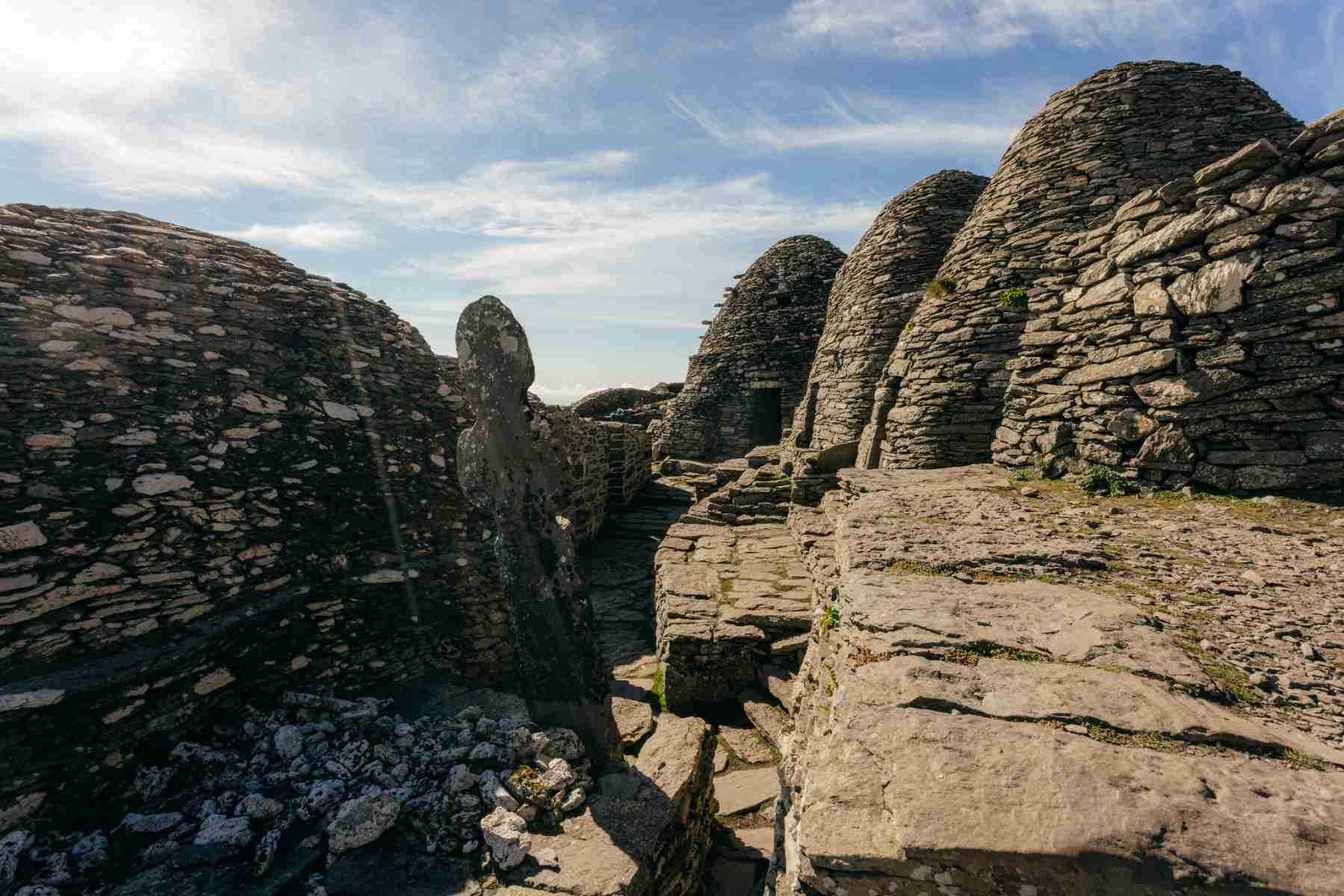
These huts have survived over 1,400 years of Atlantic storms, salt spray, and freezing winters. Inside, the cells are surprisingly dry and quiet. It was here that the monks slept, studied, and prayed. Usually, the community consisted of about 12 monks and an abbot, living in close quarters but focused on their individual spiritual journeys.
What Was on the Menu?
You might wonder how anyone could find enough to eat on a giant rock in the ocean. The monks had to be incredibly resourceful. There was almost no soil on the island, so traditional farming was out of the question, though they did manage to create small, terraced gardens using seaweed and compost to grow a few hardy vegetables and herbs.
Their primary diet consisted of:
- Fish: The surrounding waters were (and still are) teeming with life.
- Seabirds: Gannets, puffins, and razorbills were a vital source of protein.
- Eggs: During the nesting season, the cliffs provided an abundance of eggs.
- Rainwater: This was their most precious resource. The monks engineered a clever system of stone channels to collect and direct every drop of rainwater into large underground cisterns.
Life was a constant balance of survival and prayer. They lived by the seasons, knowing that a particularly bad winter could mean weeks of isolation without the ability to fish or receive any supplies from the mainland.
The Solitude of the Skelligs
Living 12km offshore meant the monks were truly at the edge of the known world. In the 6th century, people believed that beyond the horizon lay the end of the earth. For the monks, this isolation wasn't a punishment; it was a gift. It allowed them to remove themselves from the politics and conflicts of 6th-century Ireland and focus entirely on their devotion.
However, they weren't always alone. We know from historical records that the monastery was occasionally targeted by Viking raids in the 9th century. Even this remote sanctuary wasn't completely safe from the outside world. Eventually, a shift in the climate and changes in the structure of the Irish church led the monks to move back to the mainland in the 13th century, but they left behind a legacy in stone that has never been forgotten.
From the 6th Century to the 1970s
Our connection to this history is deeply personal. Skellig Michael Island Tours is a family business, and we have been guiding visitors to this incredible place since the 1970s. Back then, things were a little more rugged than they are today, but the sense of awe when you first step off the boat at the island remains exactly the same.
We feel a great responsibility to share the story of the Skellig Michael monks with the world. When you join us for a Landing Tour, you aren't just taking a boat trip; you are walking through a living museum.
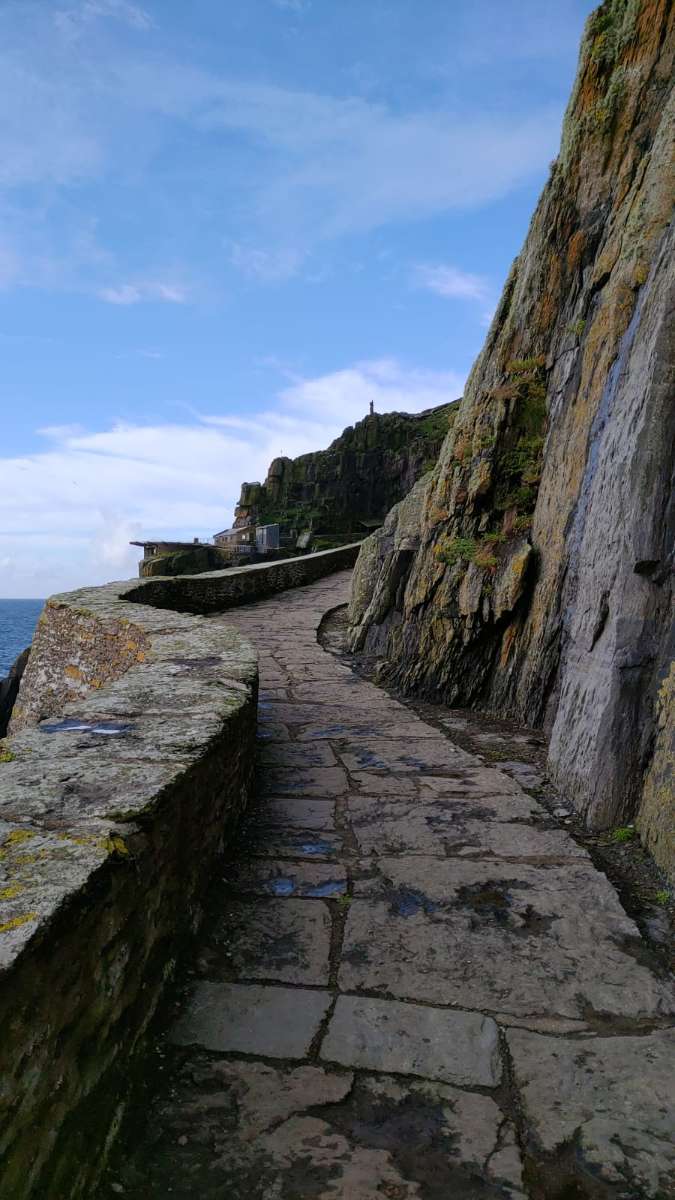
Our Landing Tours allow you to spend approximately 2.5 hours on the island itself. This gives you plenty of time to climb the 600 steps, see the Wailing Woman, explore the beehive huts, and sit in silence for a moment to imagine what it was like to call this rock home 1,400 years ago.
Experience the History Yourself
While we can't offer you a diet of seabirds and rainwater (we recommend bringing a packed lunch instead!), we can offer you the most authentic way to see the island. Our boats depart daily from Portmagee Marina, heading out across the same waters the monks navigated in their currachs.
Whether you are interested in the incredible engineering of the clocháns, the wild birds that still call the cliffs home, or simply the chance to stand where 6th-century monks once stood, Skellig Michael is a place that stays with you long after you return to the mainland.
The monks of Skellig Michael were some of the toughest and most dedicated people in Irish history. Their "commute" was a spiritual journey, and their home was a masterpiece of human endurance. We invite you to come and see it for yourself.
For more information on our tour times and how to prepare for your visit, you can visit our homepage at skelligmichael.ie or reach out to us directly through our contact page. We look forward to welcoming you on board!