
The Skellig Islands, situated approximately 12 kilometres off the coast of County Kerry, represent one of the most significant archaeological and ecological sites in Western Europe.
Comprising Sceilg Mhichíl (Skellig Michael) and Sceilg Bheag (Little Skellig), these Devonian sandstone outcrops rise precipitously from the Atlantic Ocean, providing a stark testament to both human endurance and biological diversity. For the observer seeking a comprehensive understanding of Irish heritage, an excursion to these islands offers a perspective that transcends conventional terrestrial narratives. The site demands a transition from a modern, sedentary viewpoint to one that acknowledges the arduous realities of early medieval monasticism and the raw power of the maritime environment.
The Archaeological Significance of Sceilg Mhichíl
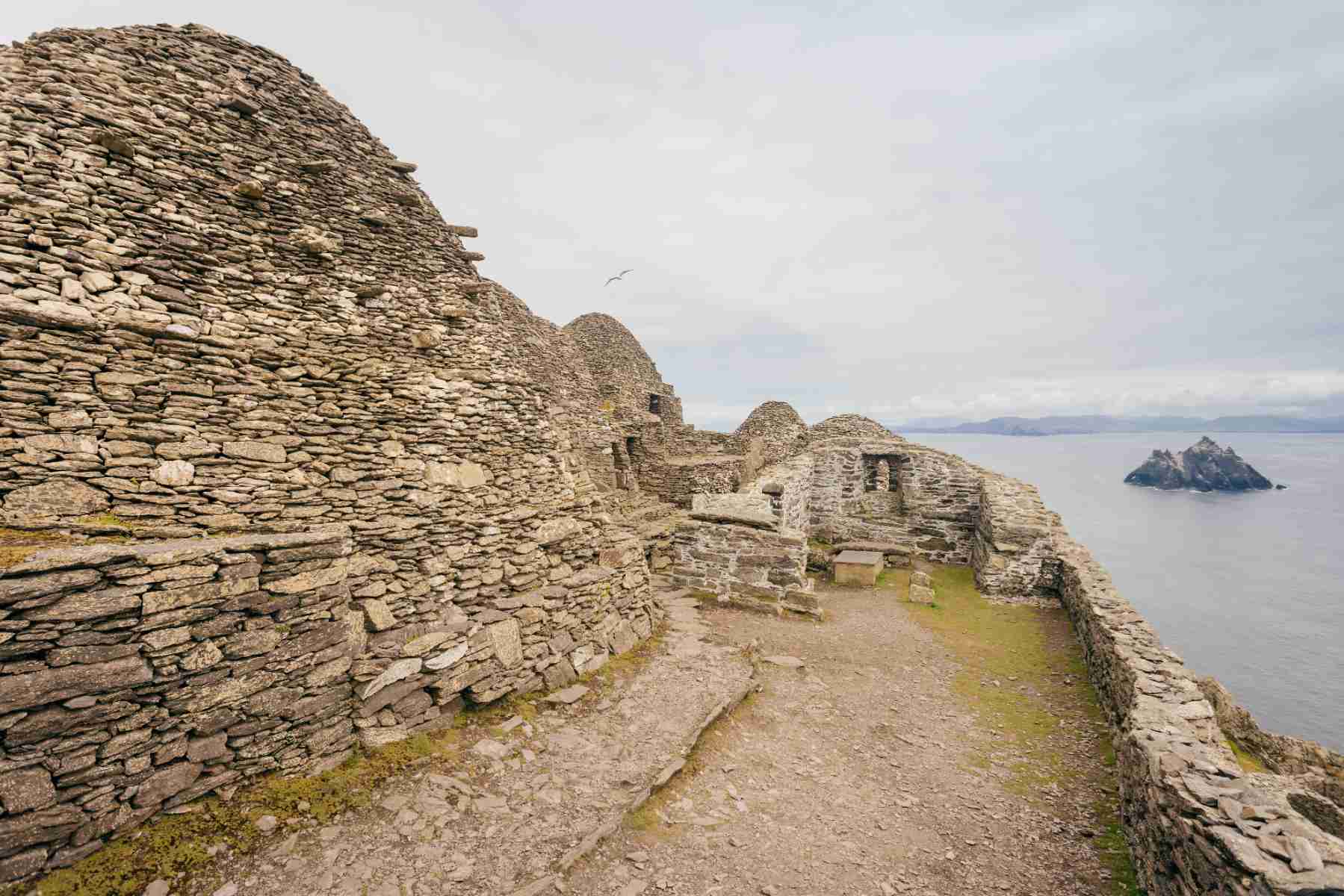
The monastic settlement on Skellig Michael, established between the 6th and 8th centuries, remains an unparalleled example of early Christian architecture.
The site was intentionally selected for its extreme isolation, serving as a locus for asceticism and spiritual withdrawal. The structural integrity of the monastery, perched on a terraced shelf 180 metres above sea level, is a result of sophisticated dry-stone masonry techniques.
The complex consists of six beehive cells (clocháns), two oratories, and a later medieval church. These structures were constructed without the use of mortar, relying instead on the precise overlapping of stones to ensure water runoff and structural stability. This architectural ingenuity has allowed the buildings to withstand the corrosive effects of Atlantic gales and salt spray for over a millennium. The precision of this construction provides essential data regarding the technological capabilities of early medieval societies in Ireland.
The Arduous Ascent: Physical Requirements and Safety
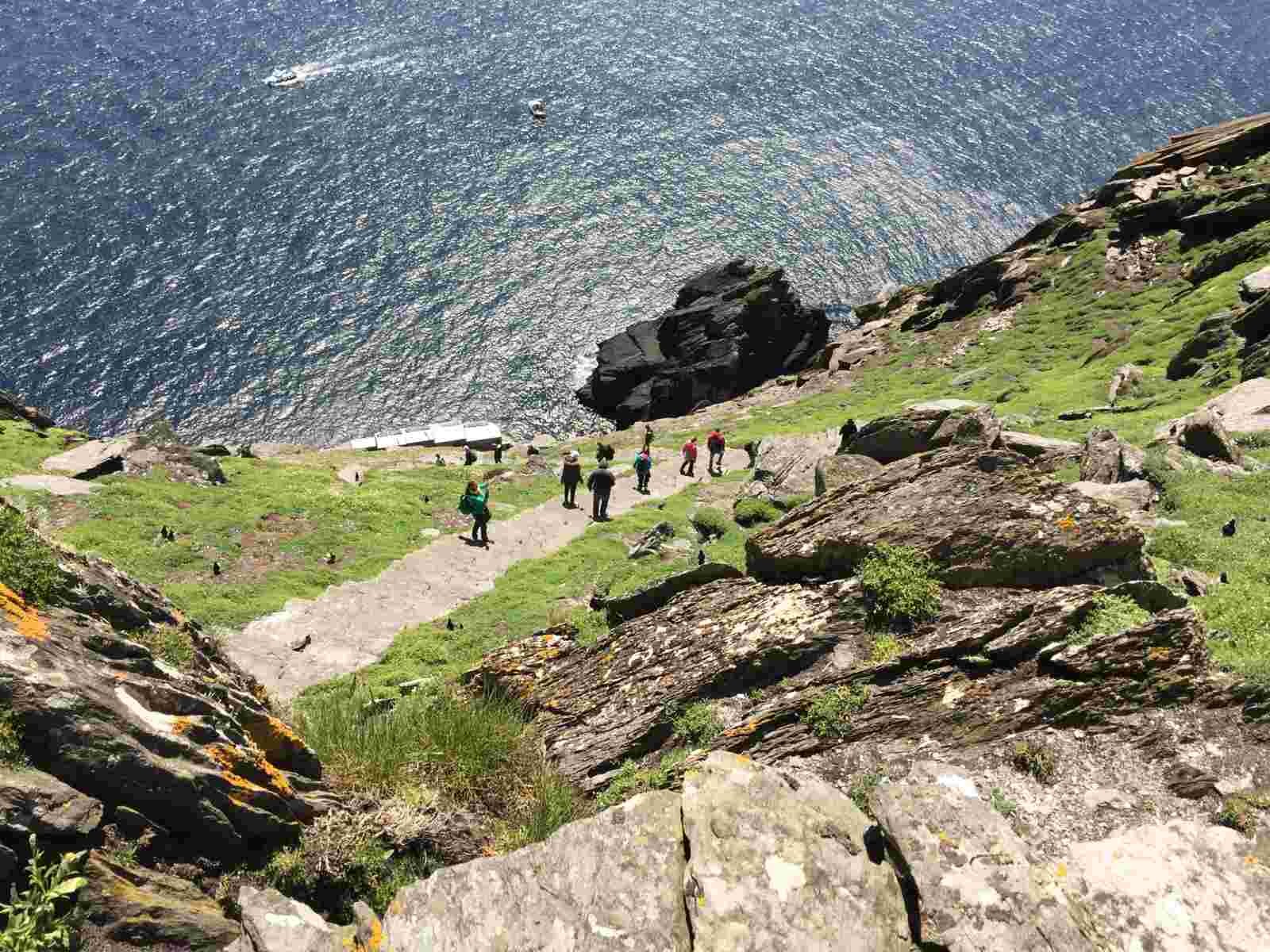
Accessing the monastic remains requires the ascent of 618 hand-carved stone steps.
This path is characterised by its steep gradient and lack of modern safety infrastructure, such as handrails or barriers. Consequently, the ascent is classified as an arduous physical undertaking.
Strict adherence to safety protocols is mandatory for all visitors. The following criteria must be met to ensure individual and group safety:
- Physical Conditioning: Individuals must possess a high level of cardiovascular fitness and stable balance. The steps are often uneven and can become treacherous when slick with moisture or sea spray.
- Footwear Requirements: Sturdy, high-traction hiking boots are essential. Footwear with inadequate grip increases the risk of slips and falls on the precipitous terrain.
- Vertigo Considerations: Those prone to acrophobia or vertigo should be aware that the path skirts significant drops with no protective fencing.
- Weather Contingencies: Operations are entirely dependent on sea conditions. High swells or adverse wind speeds result in the immediate cancellation of tours to prevent maritime accidents and ensure passenger safety at the Portmagee Marina.
Failure to respect these parameters poses a significant risk to personal safety and may result in injury. The site is a managed heritage environment, and visitors are expected to exercise extreme caution at all times. Detailed information regarding preparation can be found in the guide on how to prep for the climb of a lifetime.
Little Skellig: A Global Ornithological Stronghold
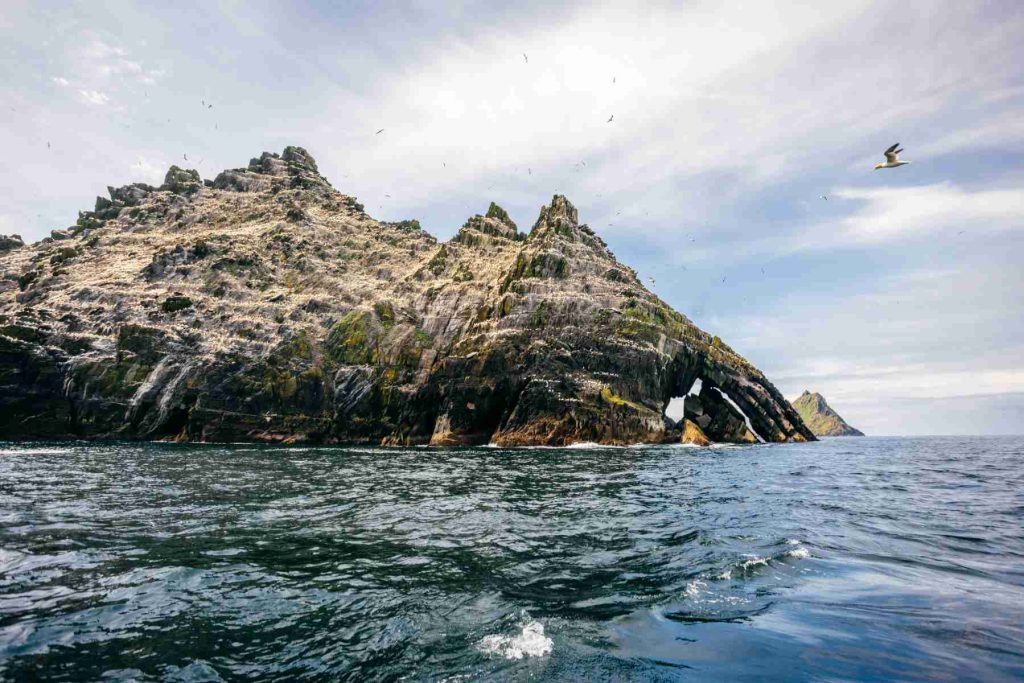
While Skellig Michael is defined by its anthropogenic history, Little Skellig is a site of immense biological importance.
It is inaccessible to human landing, preserved exclusively as a sanctuary for seabirds. The island hosts one of the largest Northern Gannet (Morus bassanus) colonies in the world, with approximately 30,000 nesting pairs.
The ecological value of the Skelligs extends to numerous other species, including the Atlantic Puffin (Fratercula arctica), Manx Shearwater, and various species of Storm Petrels. The presence of these birds contributes to the islands’ designation as a Special Protection Area (SPA) under the EU Birds Directive. Observing the sheer density of avian life from a vessel provides a clinical understanding of the Atlantic food web and the importance of offshore islands as breeding grounds. Further exploration of the local fauna is detailed in the guide to the birds of the Skellig Islands.
UNESCO World Heritage Status and Conservation Ethics
In 1996, Skellig Michael was inscribed as a UNESCO World Heritage Site. This designation recognises the site’s “Outstanding Universal Value,” noting that it illustrates, in a very extreme situation, the existence of a Christian monastic community. The preservation of this site requires a rigorous conservation programme to mitigate the effects of climate change and visitor impact.
Stewardship of the islands is governed by the “Leave No Trace” principles. It is a legal requirement that nothing is removed from the islands and no waste is left behind. The fragile ecosystem and the ancient masonry are highly susceptible to damage from anthropogenic sources. Visitors must strictly adhere to the following conservation mandates:
- Zero Waste Policy: All refuse must be retained and disposed of at the mainland facilities at Portmagee Marina.
- Structural Integrity: Touching or climbing on the ancient stone walls is prohibited to prevent erosion and structural failure.
- Wildlife Disturbance: Maintaining a respectful distance from nesting birds is critical to prevent site abandonment or stress-induced mortality.
For a comprehensive analysis of the legal and historical frameworks protecting the site, refer to the document understanding the UNESCO heritage status of the Skelligs.
Logistical Framework and Maritime Operations
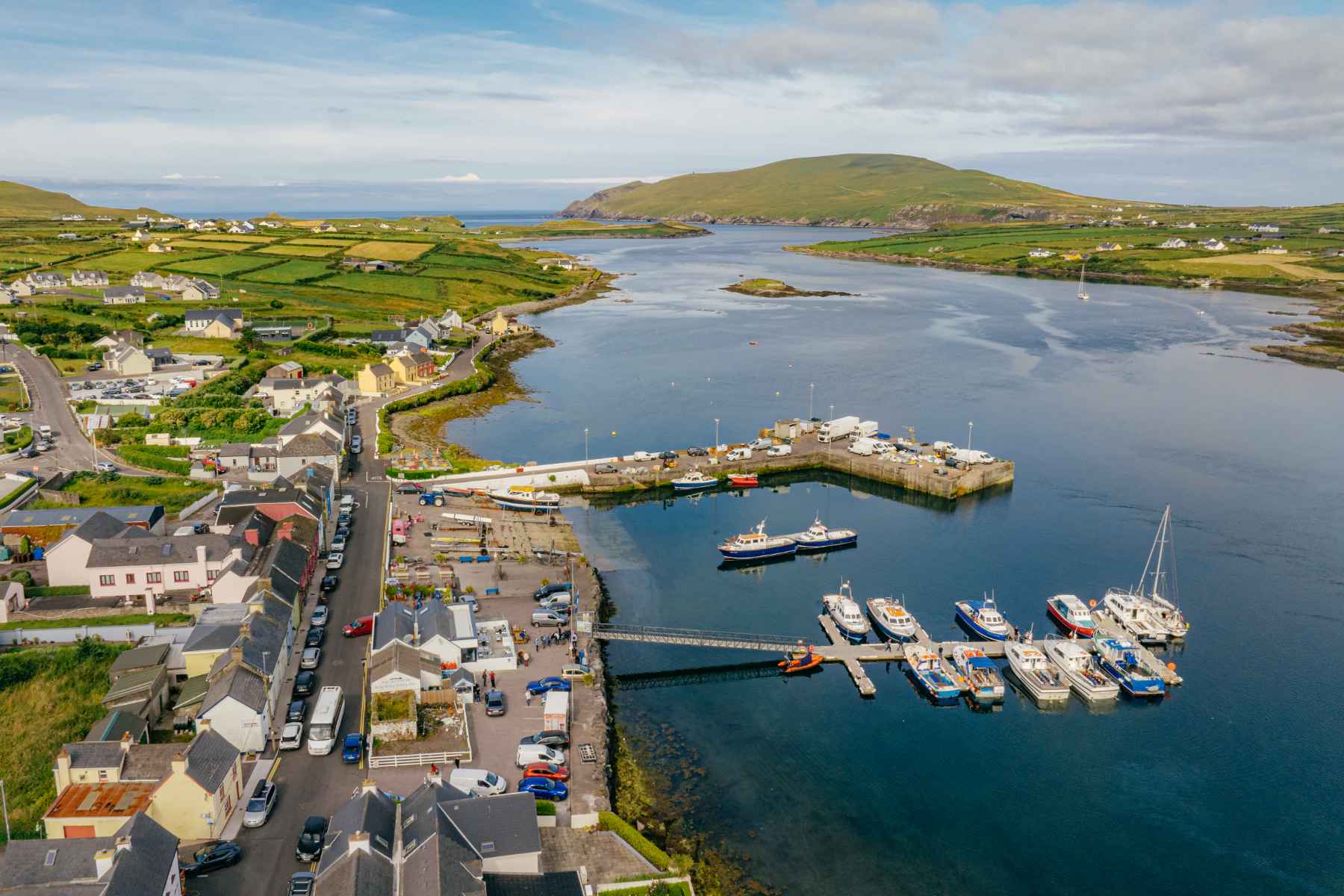
The journey to the Skelligs commences at Portmagee Marina.
The maritime transit across the open Atlantic is a fundamental component of the experience, highlighting the geographical isolation that defined the lives of the early monks. The vessels used for these Skellig Islands boat tours are equipped with necessary safety apparatus and operated by experienced mariners familiar with the complex currents of the Kerry coast.
Due to the sensitive nature of the site, landing permits are strictly limited by the Office of Public Works (OPW). This regulatory measure ensures that the daily carrying capacity of the island is not exceeded, thereby protecting the archaeological remains. Those unable to secure a landing permit or who do not meet the physical requirements for the climb may opt for an Eco & Wildlife Tour, which provides a comprehensive circumnavigation of both islands, allowing for the observation of the monastic site and the gannet colonies from the water.
The Scientific and Historical Perspective
A visit to the Skelligs provides more than a mere visual experience; it offers a profound insight into the resilience of the human spirit and the complexity of the natural world. The islands represent a confluence of history, geology, and biology that is rare on a global scale. By observing the 6th-century commute and the environmental challenges faced by the inhabitants, one gains a more nuanced appreciation for the development of Irish culture and its enduring relationship with the sea.
The transition from the mainland to these oceanic outposts forces an objective re-evaluation of Ireland’s past. It is a landscape that demands respect and requires a serious approach to both its history and its current conservation needs. For those who undertake the journey, the Skellig Islands remain an enduring symbol of a world where nature and human conviction intersect with unparalleled intensity.
For further information regarding tour schedules or safety requirements, please consult the FAQ section or contact the administrative office via the contact page.