
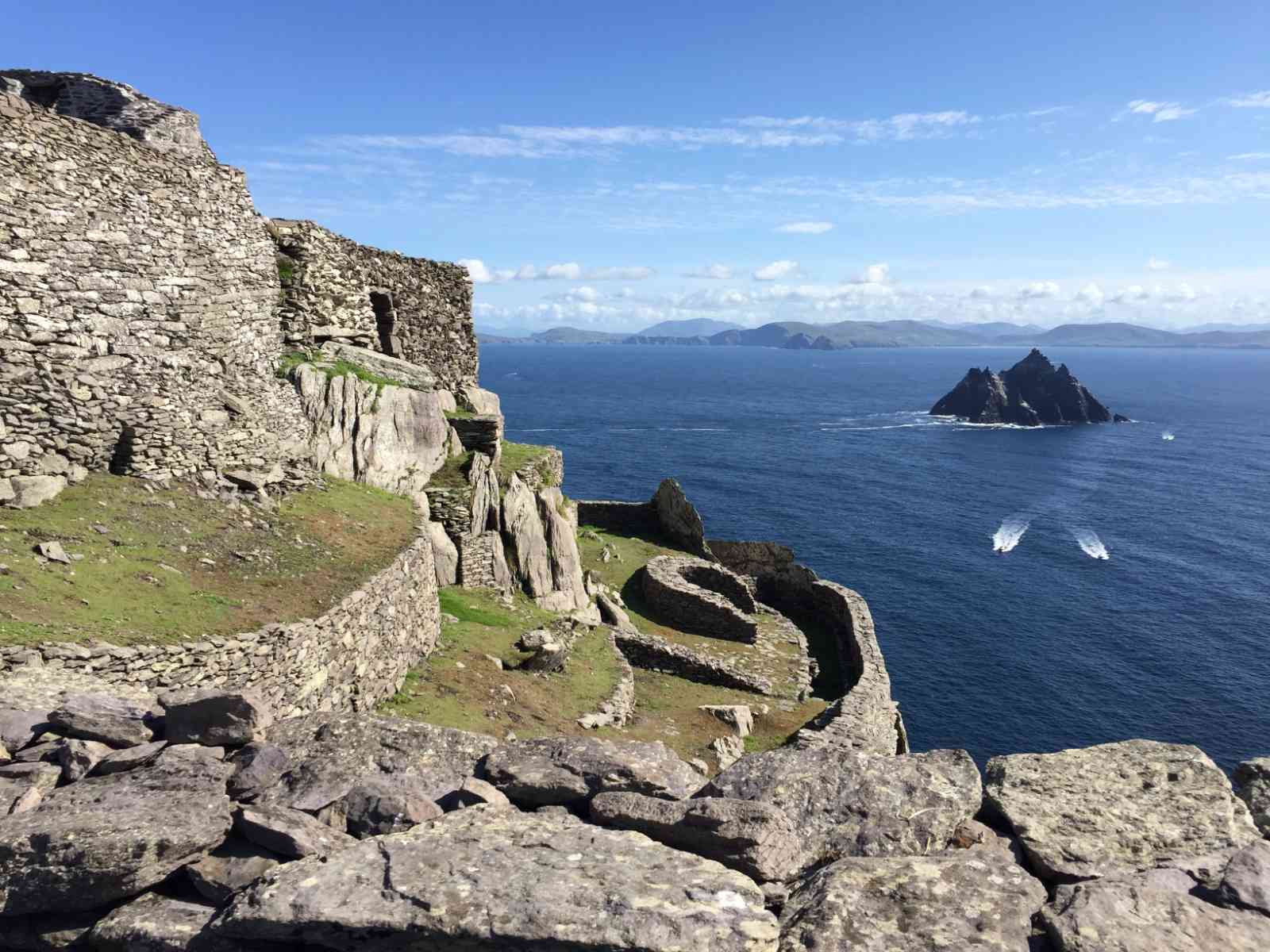
Skellig Michael, also known as Sceilg Mhichíl, represents an exceptional example of early Christian monasticism and remains one of the most significant archaeological sites in Western Europe. In 1996, the United Nations Educational, Scientific and Cultural Organisation (UNESCO) inscribed the island as a World Heritage Site. This designation is not a mere recognition of its aesthetic profile within the Atlantic Ocean; rather, it acknowledges the site’s "outstanding universal value." The criteria for this status focus on its unique illustration of a historical period and its status as a masterpiece of human creative genius, specifically regarding its dry-stone architecture and the extreme asceticism of its inhabitants.
The Skellig Islands are located approximately 11.6 kilometres off the coast of the Iveragh Peninsula in County Kerry. The larger of the two, Skellig Michael, rises to a height of 218 metres above sea level. This precipitous rock served as a sanctuary for a community of monks from at least the 6th century until the late 12th or early 13th century. The preservation of the site is attributed to its extreme isolation and the durability of the indigenous stone-working techniques employed by the monastic community.
The Criteria for World Heritage Inscription
UNESCO World Heritage status is granted based on specific cultural and natural criteria. Skellig Michael satisfies Criteria (iii) and (iv). Criterion (iii) requires a site to "bear a unique or at least exceptional testimony to a cultural tradition or to a civilisation which is living or which has disappeared." The monastic settlement on Skellig Michael is a singular testimony to the extreme form of Christian monasticism that characterised early medieval Europe and North Africa.
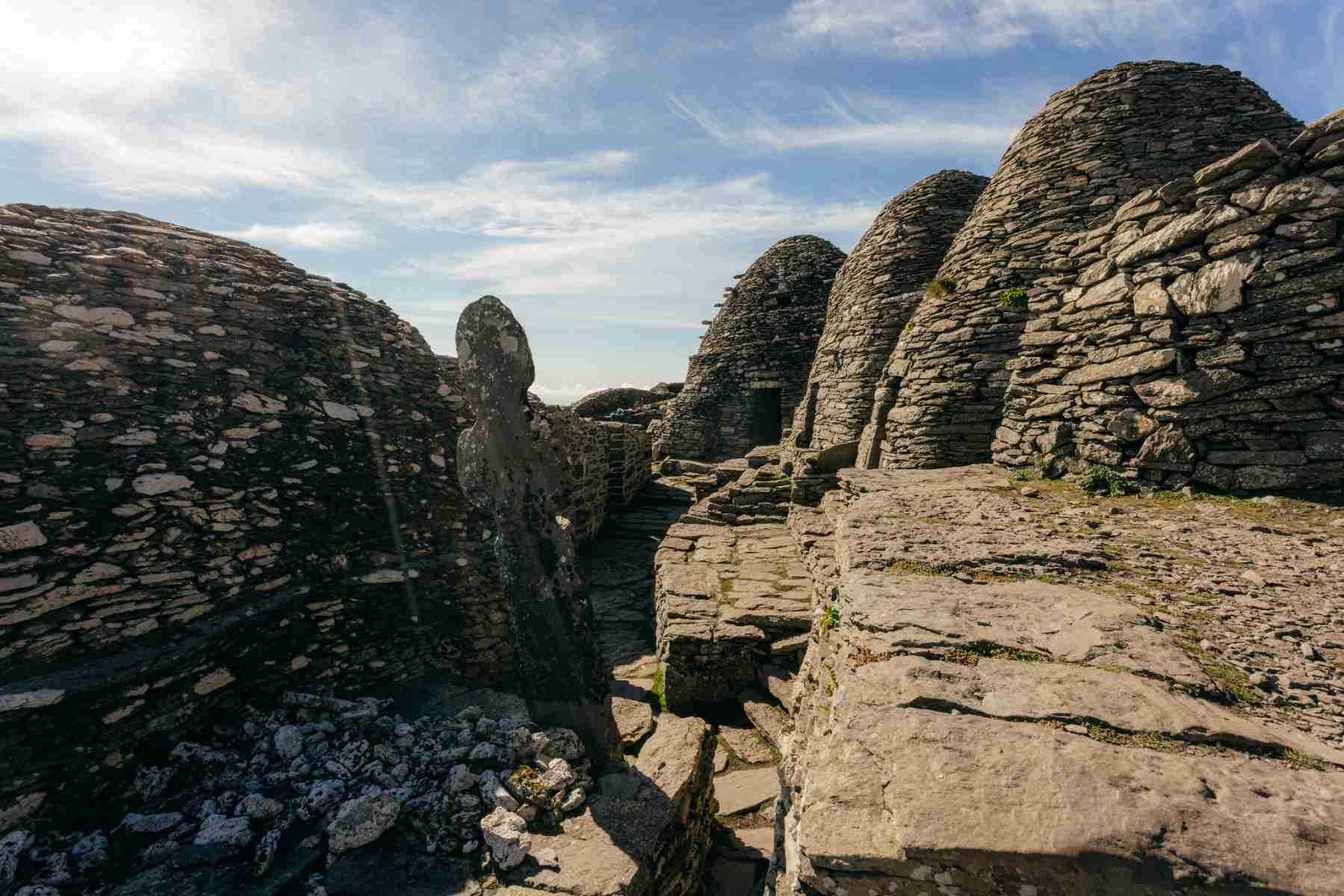
Criterion (iv) necessitates that a site be "an outstanding example of a type of building, architectural or technological ensemble or landscape which illustrates (a) significant stage(s) in human history." The dry-stone structures on the island, including the oratories and beehive huts (clocháns), represent a peak in the evolution of Corbelled stone construction. These structures have remained remarkably intact despite centuries of exposure to Atlantic weather systems.
Early Christian Monasticism and Historical Context
The origins of the monastery on Skellig Michael are traditionally attributed to Saint Fionán. Between the 6th and 8th centuries, a small group of monks established a settlement on a narrow, man-made terrace 180 metres above the sea. This choice of location was deliberate. In the early medieval period, the "desert" of the ocean was viewed as a place of spiritual trial and purification. The monks sought a life of absolute solitude, prayer, and self-sufficiency.
Historical records indicate that the community survived multiple Viking raids in the 9th century. Despite these incursions and the inherent difficulty of the terrain, the monks maintained their presence. By the 12th century, shifts in the Irish Church and a cooling climate led to the eventual abandonment of the permanent settlement. The monks transitioned to the mainland, establishing a base at Ballinskelligs, though the island remained a site of significant pilgrimage for centuries. Today, visitors embarking on a skellig michael tour encounter the same landscape that greeted these medieval ascetics.
Architectural Integrity and Engineering
The architectural ensemble at the monastery complex is a technical marvel of the early medieval period. The construction utilizes dry-stone masonry, a technique where stones are stacked without the use of mortar. The precision of this work has allowed the structures to remain waterproof and structurally sound for over a thousand years.
The Beehive Huts (Clocháns)
The residential quarters consist of six corbelled stone cells. These beehive-shaped huts were designed with a circular base, with each successive layer of stone projecting slightly inward until the structure was capped with a single stone at the apex. This design facilitates efficient water drainage, ensuring the interior remains dry even during heavy Atlantic rainfall.
The Oratories and Church
In addition to the cells, the complex includes two oratories. These structures are shaped like upturned boats and served as places of communal worship. A later addition, St Michael’s Church, was constructed with mortar, indicating a shift in architectural style during the 10th or 11th century. The presence of a graveyard with carved stone crosses further emphasises the liturgical importance of the site.
The Engineering of Access: The 600 Steps
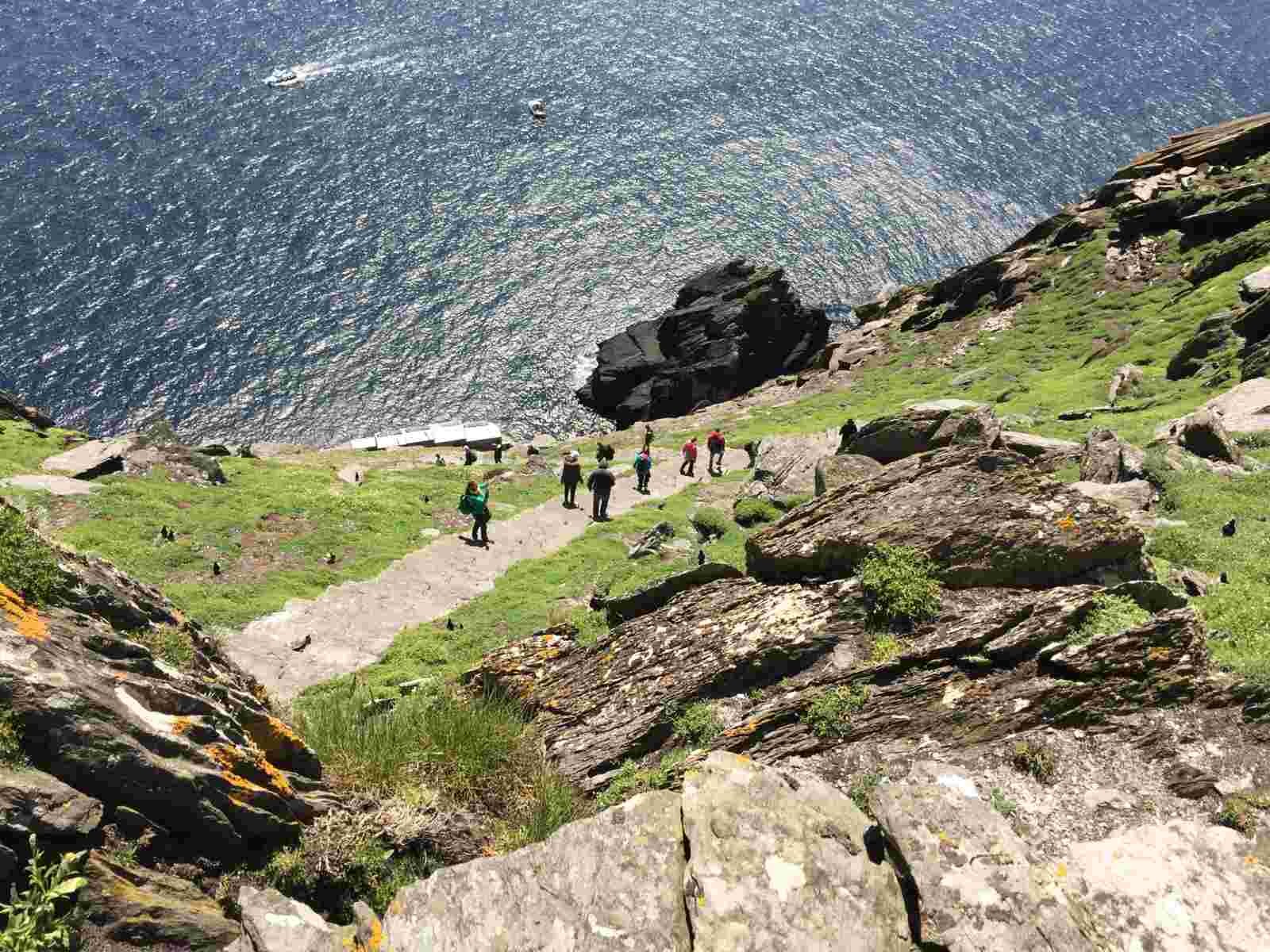
Accessing the monastery requires the navigation of a sophisticated staircase system. The monks carved approximately 600 stone steps into the rock face, connecting the three original landing points to the monastic enclosure. This achievement in engineering demonstrates a profound understanding of the island's topography and geology.
The ascent is arduous and precipitous. There are no handrails on the upper sections, and the path remains exposed to the elements. For modern visitors on a skellig islands tour, this climb provides a direct physical connection to the daily reality of the medieval monks. It is a mandatory requirement for all visitors to possess a high level of physical fitness and appropriate footwear to mitigate the risk of injury on the steep, uneven terrain.
Ecological Significance and Wildlife Conservation
While the cultural heritage of Skellig Michael is paramount, the islands are also of immense ecological value. The Skelligs are a designated Special Protection Area (SPA) due to the presence of significant seabird colonies.
The Gannet Colony on Little Skellig
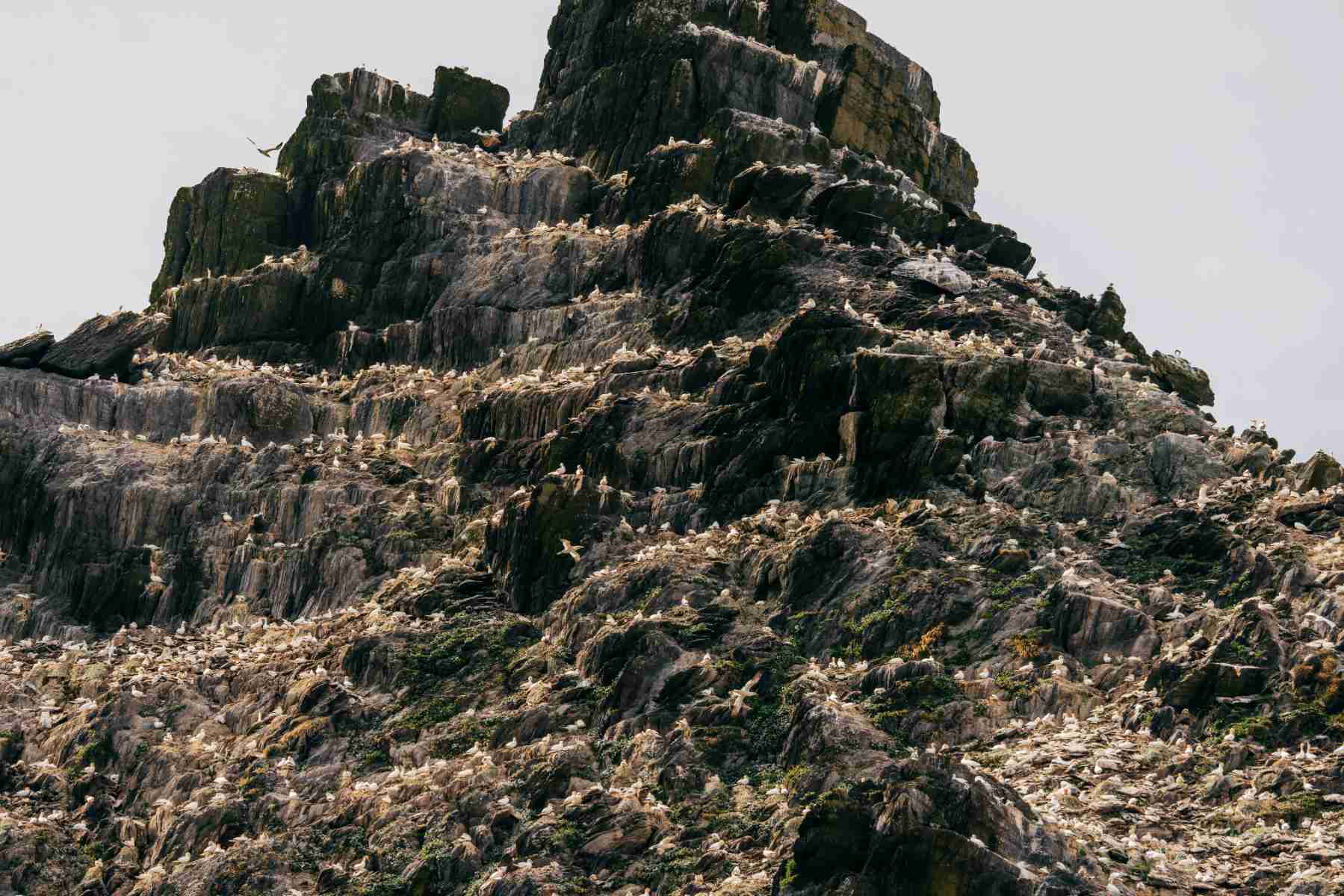
Little Skellig, though inaccessible for landing, is home to one of the largest northern gannet colonies in the world. Approximately 30,000 pairs of gannets nest on the rock, creating a visual and auditory spectacle that is best observed during a skellig michael boat trip. The white appearance of Little Skellig from a distance is not due to snow or rock colour, but rather the sheer density of the nesting birds and their guano.
Skellig Michael Puffins and Other Species
Skellig Michael itself serves as a major breeding ground for several species, most notably the Atlantic Puffin. Between April and early August, thousands of skellig michael puffins nest in burrows within the soft soil on the island’s slopes. The island also supports populations of Manx Shearwaters, Storm Petrels, Kittiwakes, and Fulmars. The conservation of these species is a critical component of the island's management plan, and visitors are strictly prohibited from disturbing nesting sites or wandering off marked paths.
The Skellig Michael Lighthouse and Maritime History
The 19th century introduced a new chapter to the island's history with the construction of the skellig michael lighthouse. In the 1820s, the Corporation for Preserving and Improving the Port of Dublin (the predecessor to the Commissioners of Irish Lights) established two lighthouses on the island to improve maritime safety on the treacherous Atlantic shipping lanes.
The lower lighthouse remains operational today, though it was automated in 1987. The construction of the lighthouses and the associated access road significantly altered the lower landscape of the island but provided vital infrastructure for Atlantic navigation. This layer of maritime history complements the earlier monastic period, illustrating the island's continued importance as a beacon on the edge of the European continent.
Preservation and Modern Stewardship
Managing a UNESCO World Heritage site in such a remote and harsh environment presents unique logistical challenges. The Office of Public Works (OPW) oversees the conservation and maintenance of the monastic remains. Every summer, a team of specialist masons and archaeologists resides on the island to perform essential repairs using traditional techniques and materials.
Skellig Michael Island Tours, a family-run operation since the 1970s, operates within the strict regulatory framework established by the National Parks and Wildlife Service (NPWS) and the OPW. We provide an authentic Irish welcome while ensuring that all visitors understand the gravity of the conservation efforts. Stewardship of the island requires a commitment to "Leave No Trace" principles. Visitors are mandated to carry all refuse back to the mainland and are strictly forbidden from removing any stones or organic material from the site.
Logistics and Safety Mandates
Due to its UNESCO status and hazardous terrain, visitor numbers are strictly capped. Landing is only permitted during a specific season, typically from mid-May to early October, and is entirely weather-dependent. The Atlantic swell frequently makes landing at the pier impossible, necessitating the cancellation of trips for safety reasons.
For those unable to undertake the arduous climb or when landing is not feasible, an alternative maritime perspective is available through the Eco Boat Tour. This provides a comprehensive overview of both islands, focusing on the bird colonies and the external views of the monastic terraces, without the risks associated with the ascent.
The Skelligs represent a rare intersection of human spiritual aspiration, architectural brilliance, and raw natural power. Understanding the depth of their heritage ensures that the experience of visiting is not merely a recreational excursion but an encounter with a preserved fragment of human history. Proper preparation and a respectful approach to the environment are essential for all who wish to witness this unparalleled UNESCO World Heritage site.