
Skellig Michael and Little Skellig are two rocky islands about 12 km off the Iveragh Peninsula in County Kerry. Each spring and summer, large numbers of seabirds come to the islands to nest.
Most visitors come to see the puffins, and our guide to puffins on Skellig Michael explains when they arrive and leave. This guide covers the other birds on Skellig Michael and Little Skellig too, and where to look for them.
Both islands are Special Protection Areas for birds under EU law.
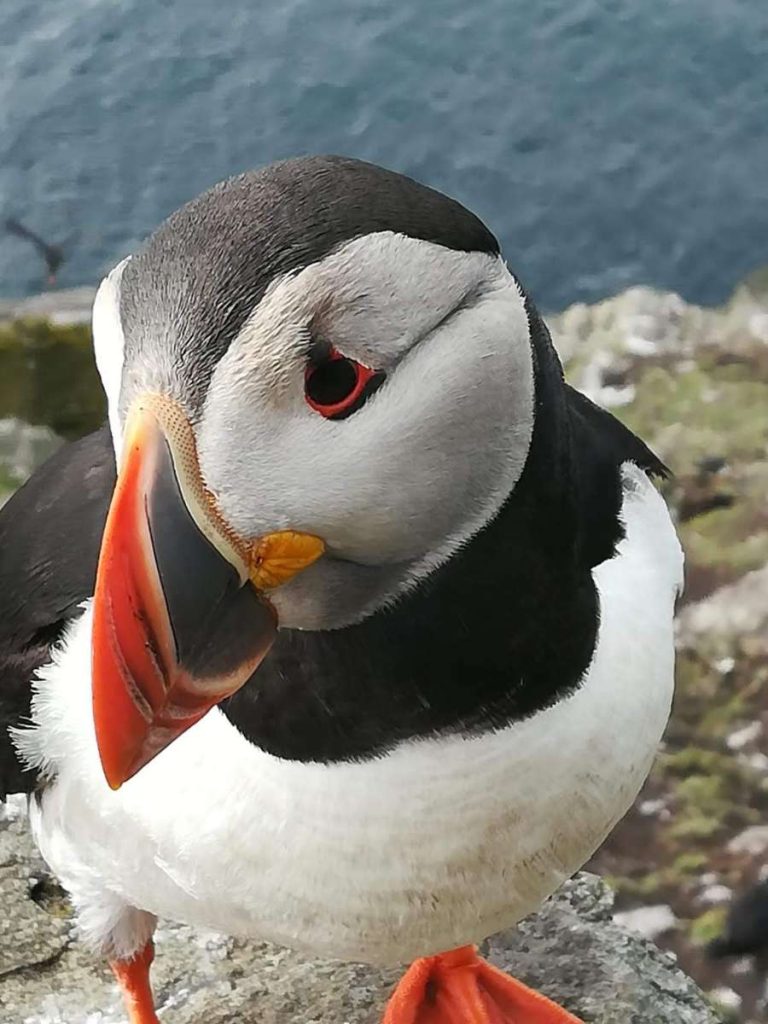
Puffins
Puffins are on the islands from about late April to early August, with the best chance of seeing them in May, June and July.
They nest in burrows in the soil, many of them close to the paths on Skellig Michael. For a month by month guide, read our puffin guide.
Gannets, the main birds on Little Skellig
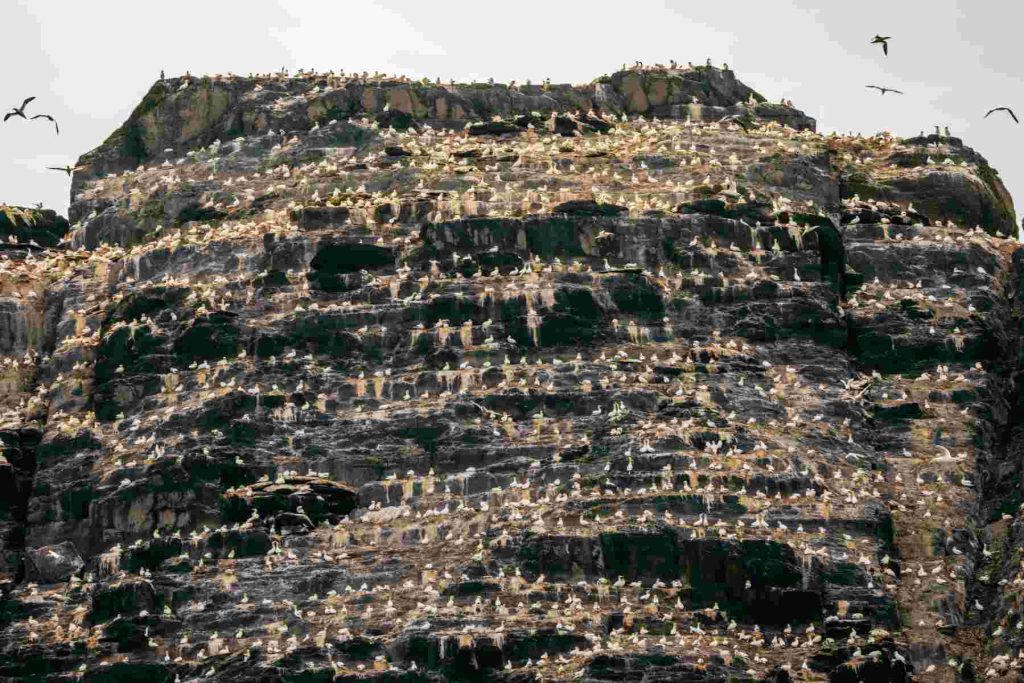
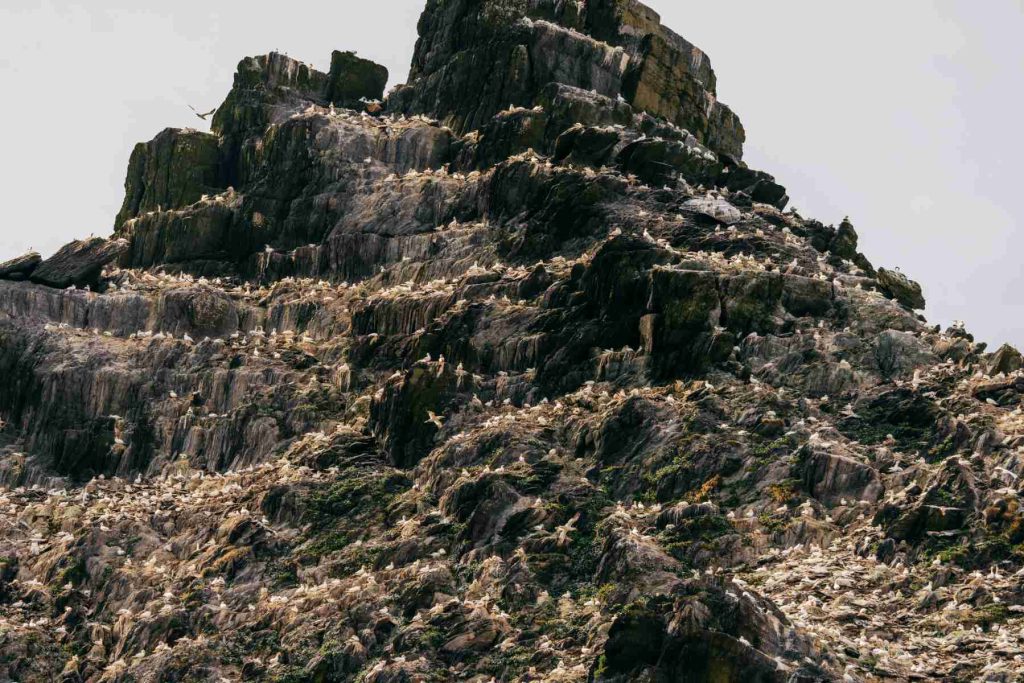
Little Skellig has one of the biggest gannet colonies in the world, with so many birds that the island looks white from a distance.
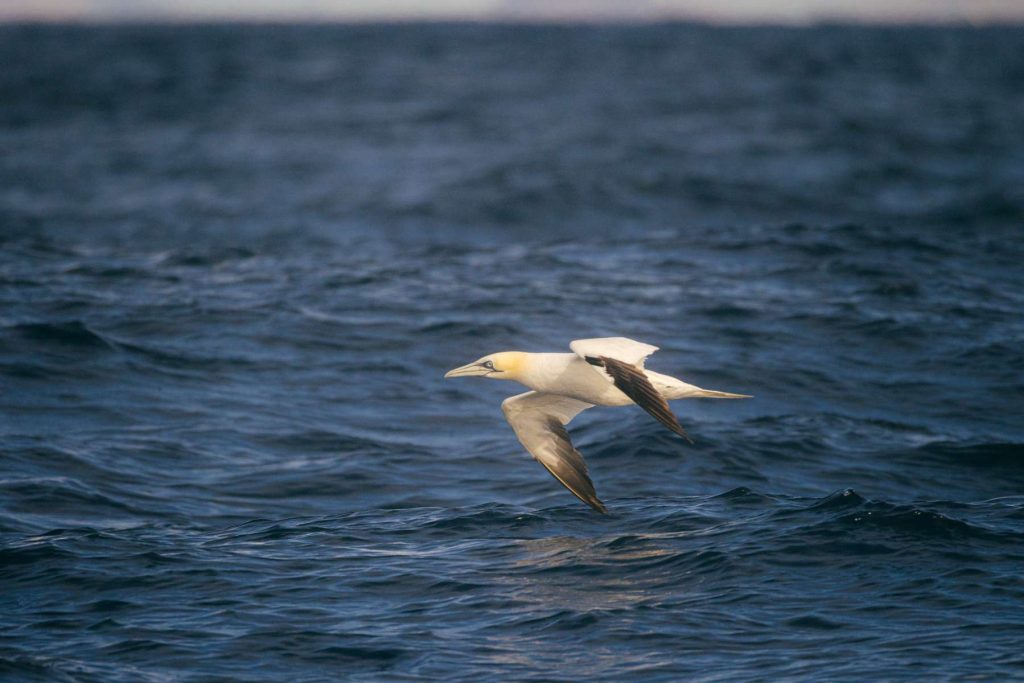
The gannet is the largest seabird in Ireland, with wings up to two metres across. Adults are white with black wingtips and a pale yellow head and neck.
Gannets catch fish by diving head first into the sea from up to 30 metres. They hit the water at about 100 kilometres an hour, and air sacs in the face and chest soften the impact. Watching them dive is one of the main sights on a boat trip around the islands.
Kittiwakes
Kittiwakes are medium-sized gulls that spend the winter at sea, and on Skellig Michael they nest on the lower cliff ledges near the landing places.
You can tell them from other gulls by their solid black wingtips, yellow bill and dark legs. Their name comes from their loud, repeated call.
They build nests of mud and weed from the sea on narrow rock shelves. Unlike many gulls, they do not feed at rubbish tips but live on small fish and other small sea animals.
Guillemots and razorbills
Guillemots and razorbills belong to the auk family and spend most of their lives at sea, where they use their wings to swim underwater.
Guillemots
Guillemots are chocolate brown on top and white underneath, and they nest packed close together on flat ledges.
Instead of building a nest, each female lays one pear-shaped egg straight onto the bare rock. The shape is thought to help stop the egg rolling off the ledge.
Razorbills
Razorbills look like guillemots but are darker, almost black, with a thick, blunt black bill that has a thin white line across it.
They choose more sheltered places to nest, such as cracks in the rock and gaps in the old stone walls of the monastery. They swim well and dive for sand eels and sprats.
Fulmars
Fulmars look like gulls, but they are related to albatrosses. They have a small tube on top of the bill that helps them get rid of extra salt. They glide for long periods on the wind that rises off the cliffs, which saves them energy.
When threatened, adults and chicks spit a foul-smelling orange oil that can damage the feathers of birds that attack them. If you land on Skellig Michael, keep well back from any fulmar nesting near the steps.
Manx shearwaters and storm petrels
Both of these birds nest on the Skelligs in large numbers. But they only come ashore at night, to stay safe from big gulls and ravens, so you are unlikely to see them on land.
- Manx shearwaters. They nest in burrows in the soft soil on the upper slopes of Skellig Michael. In winter they travel as far south as the coast of South America.
- Storm petrels. These are the smallest seabirds in Europe, sooty black with a white rump and about the size of a sparrow.
Storm petrels nest deep in the dry-stone walls of the old monastery huts and among loose rocks on the slopes. They feed by fluttering low over the sea, with their feet pattering on the surface.
Land birds on the islands
A few land birds also live on the Skelligs.
- Choughs. Choughs belong to the crow family and are glossy black with red legs and a long, curved red bill. Look for them flying around the high ground of Skellig Michael.
- Rock pipits. These are small, plain birds found along the shore and on the lower grassy slopes. They feed on tiny creatures among the weed on the rocks.
- Peregrine falcons. Peregrines sometimes nest on the hardest cliffs to reach and hunt the smaller seabirds.
How to see the birds
Our Skellig Islands boat tour circles Skellig Michael and Little Skellig, takes about 2.5 to 3 hours and is open to all ages.
You see the gannet colony on Little Skellig from the water, along with the seabirds on the cliffs of Skellig Michael. You may also see grey seals on the boat tour, which runs from April to October, weather permitting.
On the landing tour, you walk up the steps of Skellig Michael past puffin burrows and nesting seabirds. Bring binoculars on either tour if you have them.
Puffins are easiest to see from May to July, so read our guide to the best time to visit before you book.
Looking after the birds
The bird colonies on the Skelligs are easily disturbed, so please follow these rules.
- Stay on the paths and steps, because puffin and shearwater burrows lie just under the surface and can collapse if you step on them.
- Keep your distance from nesting birds.
- Do not take anything from the island.
- There are no bins on Skellig Michael, so take all your litter home.