Whale and dolphin watching off the Skellig coast
This trip goes out from Portmagee into the open sea off the Iveragh Peninsula to look for whales, dolphins and basking sharks. The skipper chooses the route on the day, based on the weather and where the animals have been seen.
Sightings are never guaranteed. The animals move freely, and no skipper can promise what you will see.
We arrange this trip on request. Trips usually take about 4 hours and are for ages 5 and over.
 Ask about this trip
Whales and dolphins in Irish waters
In 1991 Ireland declared all its waters a protected area for whales and dolphins. It was the first country in Europe to do this.
Twenty five species of whale, dolphin and porpoise have been recorded in Irish waters. Most whale watching in Ireland takes place off the south and south west coasts, in Kerry, Cork and Clare.
What you may see
- Common dolphins. The animals we see most often. They are fast and social, and often swim at the front of the boat.
- Minke whales. The smallest of the great whales, at 8 to 10 metres long. Look for the small puff of mist when they breathe.
- Fin whales. The second largest animal on earth, after the blue whale.
- Humpback whales. Seen off the south coast at times, but less often than minke and fin whales.
- Harbour porpoises. Small and shy, with a short fin on the back.
- Basking sharks. The second largest fish in the world, growing to over 10 metres. They feed on plankton at the surface and are harmless to people. Basking sharks have been protected in Irish waters since 2022.
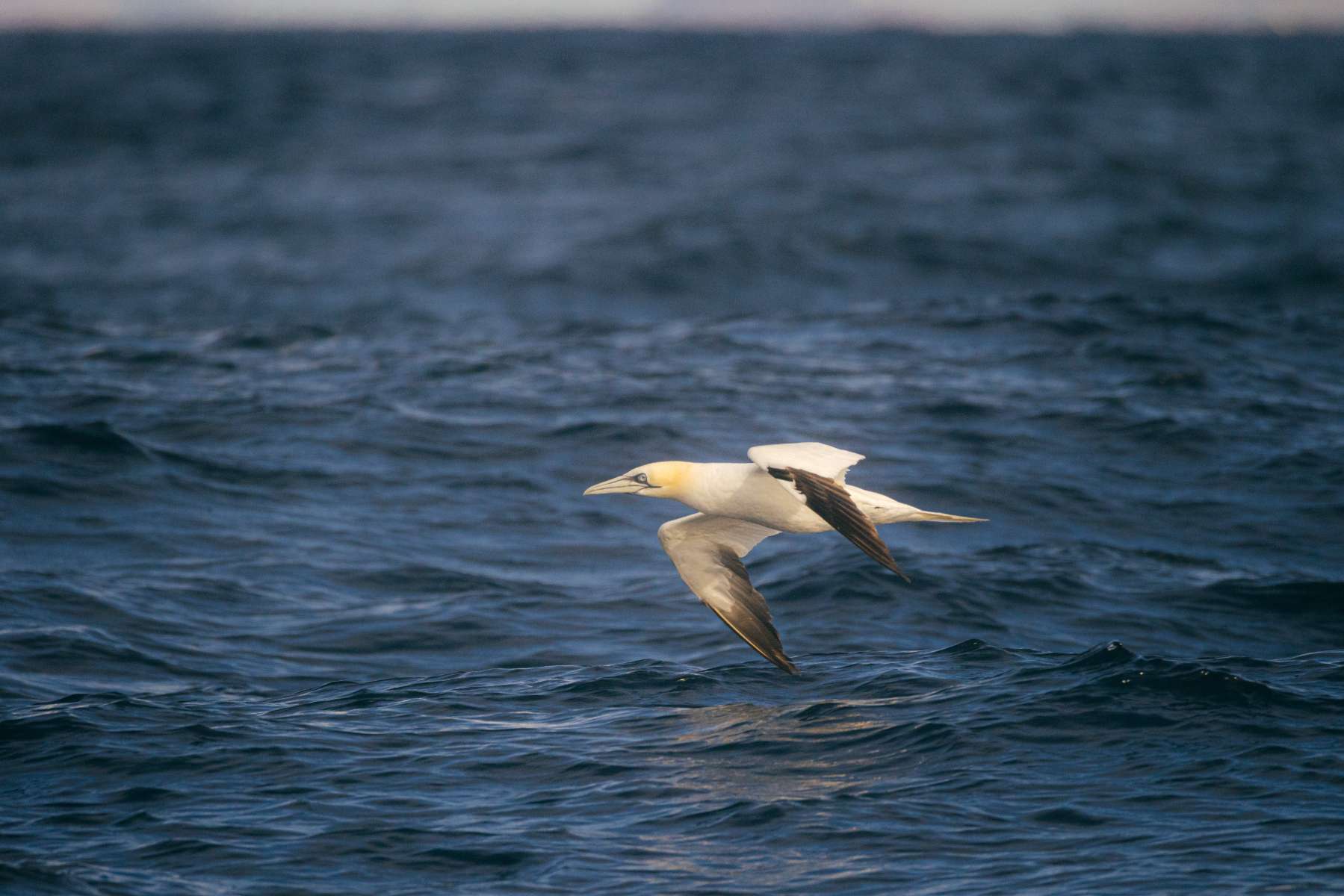
Gannets diving into the sea can show where the fish are, and whales and dolphins often feed in the same places.
For more about each animal, read our guide to whale and dolphin watching on the Skellig coast.
When to go
- Dolphins and porpoises. Here all year.
- Minke whales. Mostly spring, summer and autumn.
- Fin and humpback whales. Mostly late summer into winter.
- Basking sharks. In Irish waters from about May to October, most often in late spring and early summer.
The sea is usually calmest in summer. Trips in autumn and winter depend on the weather.
How we watch whales and dolphins
We follow the Irish guidelines for watching whales and dolphins so that we do not disturb them. The guidelines ask boats to do the following.
- Keep at least 100 metres from whales.
- Approach slowly and at a steady speed, and never chase or surround a group.
- Spend no more than 30 minutes with any one group of animals.
What to bring
- Warm layers. It is often several degrees cooler at sea than on land.
- A windproof or waterproof jacket. Bring one even if it is warm in Portmagee.
- Flat shoes. Wear shoes with rubber soles, as decks can be slippery.
- Binoculars. We keep our distance, so binoculars help you see more.
- Sun cream. Sun reflecting off the water can burn you before you notice.
Booking this trip
We arrange this trip on request. Call or email us with your dates and the number of people in your group.
- Phone. +353 66 948 8022
- Email. info@skelligmichael.ie
All trips depend on safe sea conditions. If we cancel for weather, we offer you another date or a full refund.
Frequently asked questions
Are sightings guaranteed?
No. Some trips see a lot and some see very little. Our skippers know these waters well, but the animals move freely.
Can children come?
The trip is for ages 5 and over. For younger children, our Portmagee harbour tour is a shorter trip for all ages.
Do you see dolphins on the Skellig tours?
Sometimes. Dolphins do swim alongside our boats on the way to the Skelligs. But the landing tour and boat tour are planned around the islands, so book this trip if whales and dolphins are your main interest.
Where do we leave from?
All our trips leave from Portmagee Marina. Parking in the village is free. Please arrive 30 minutes before departure.
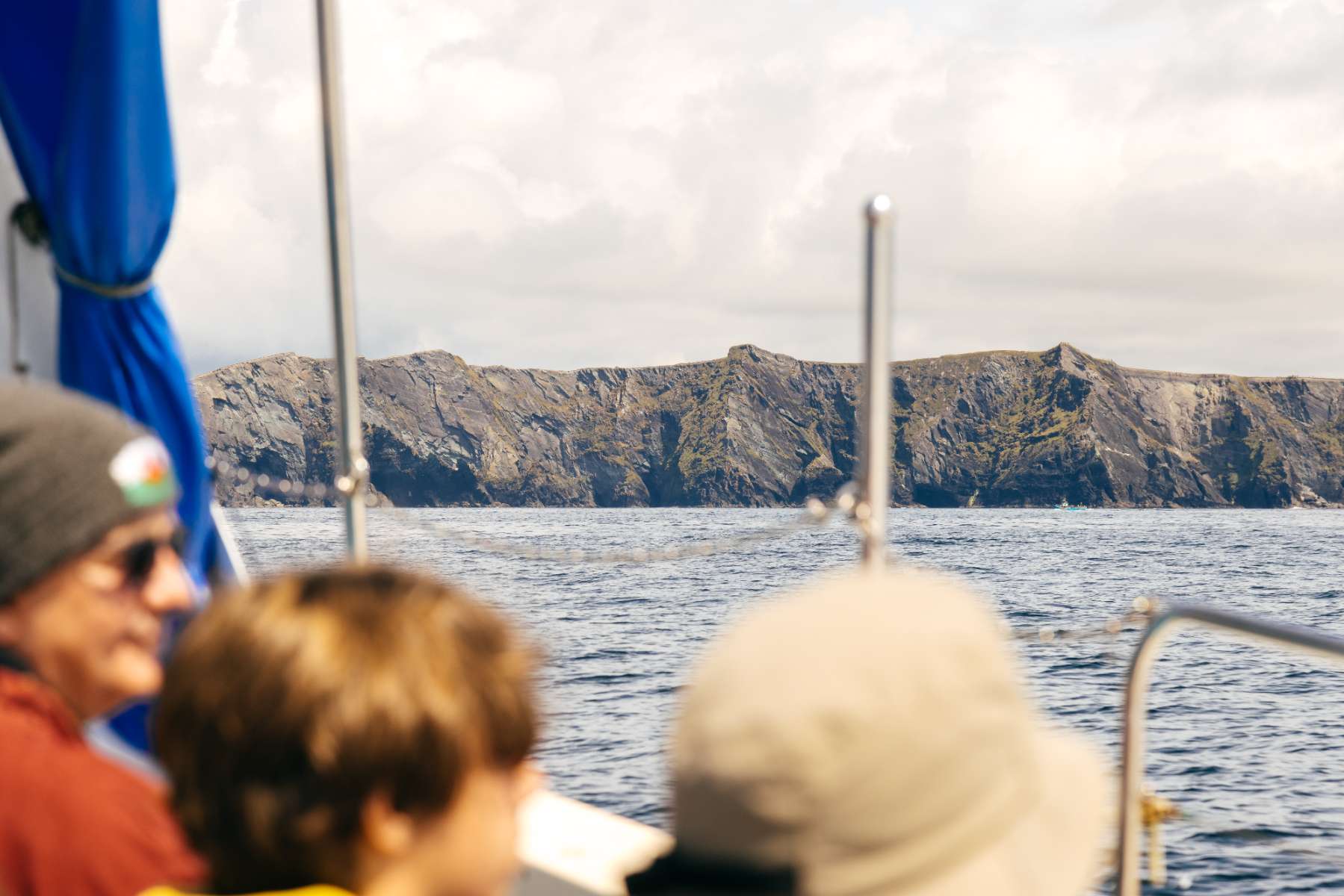
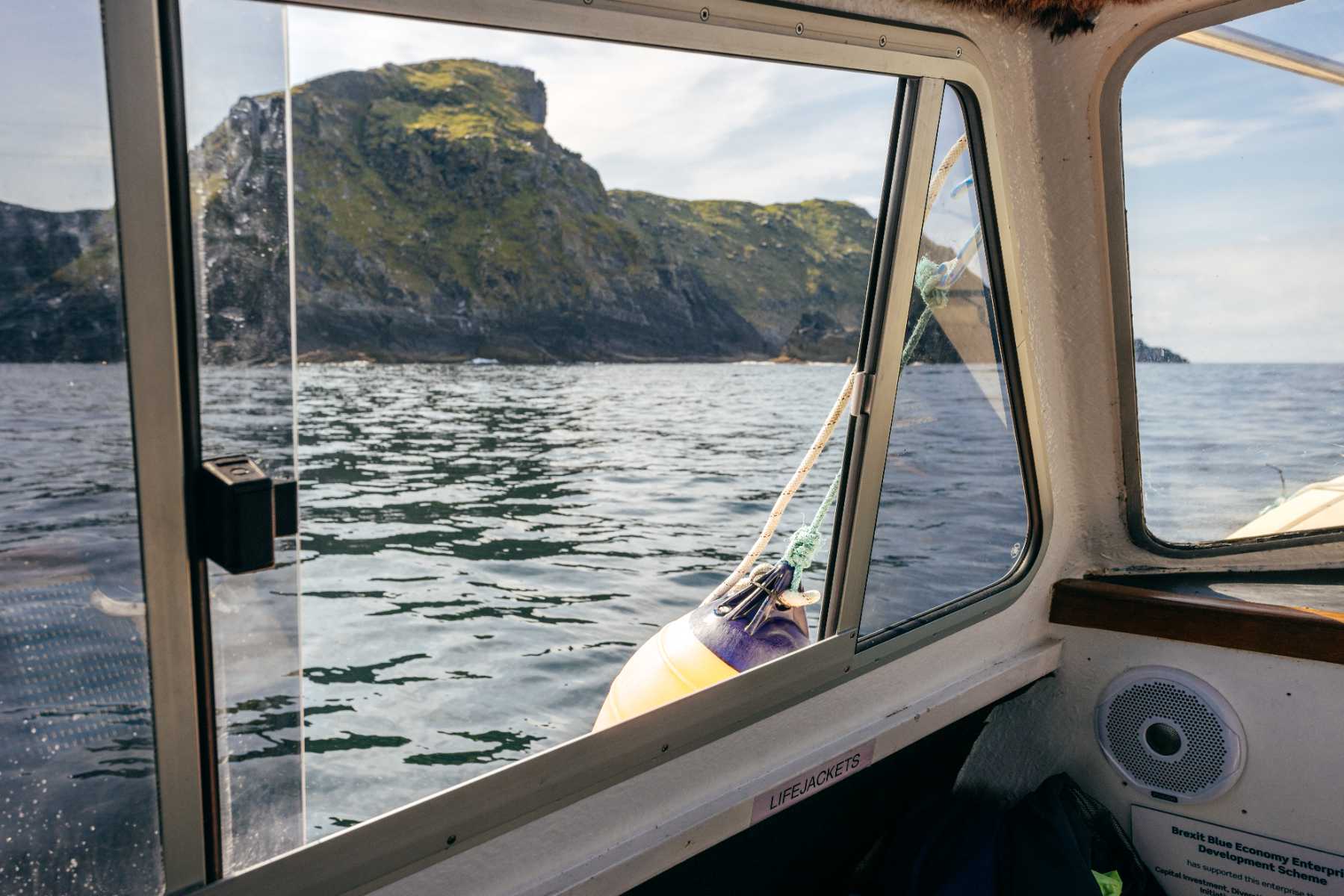
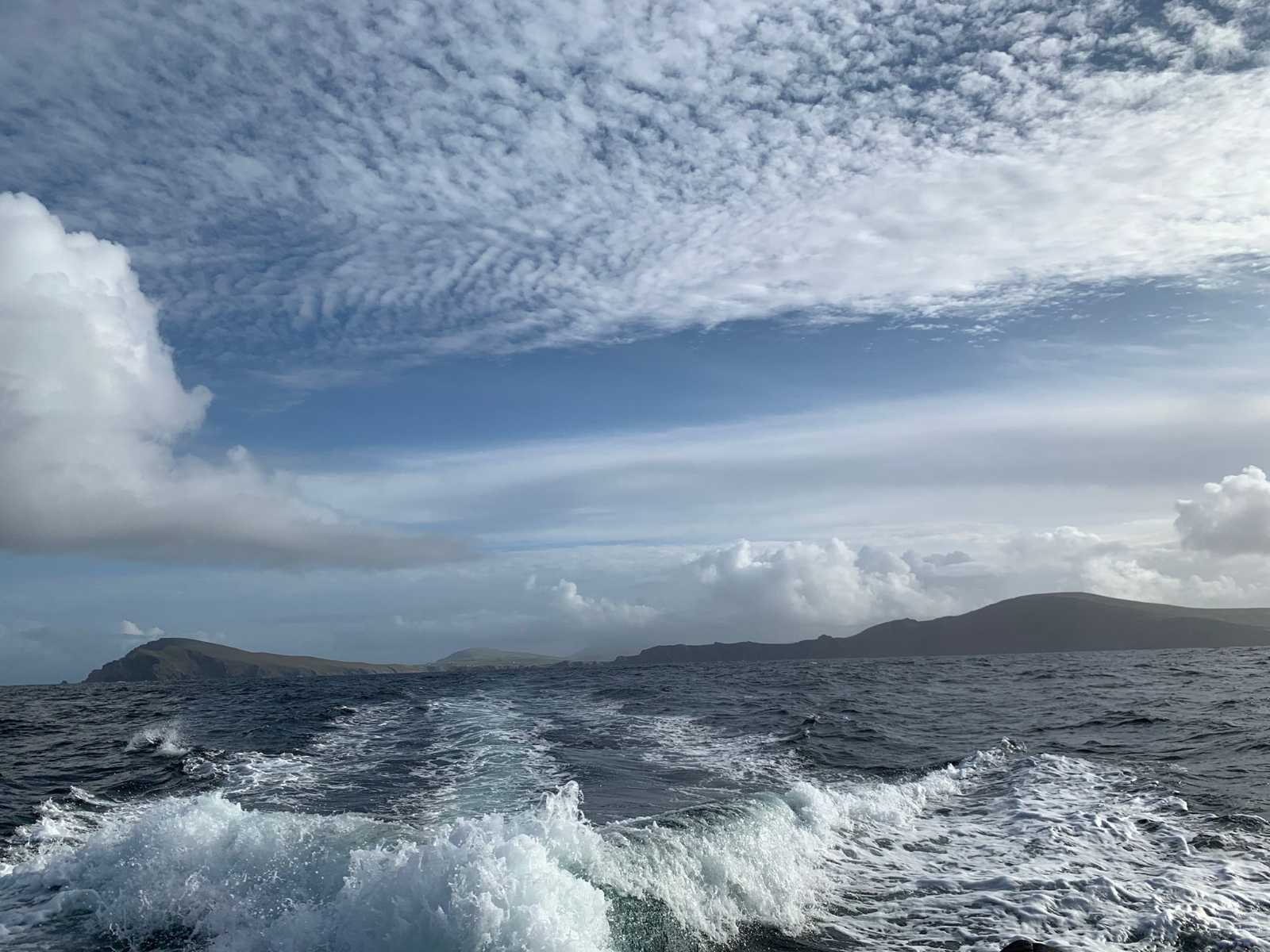
Out on the water
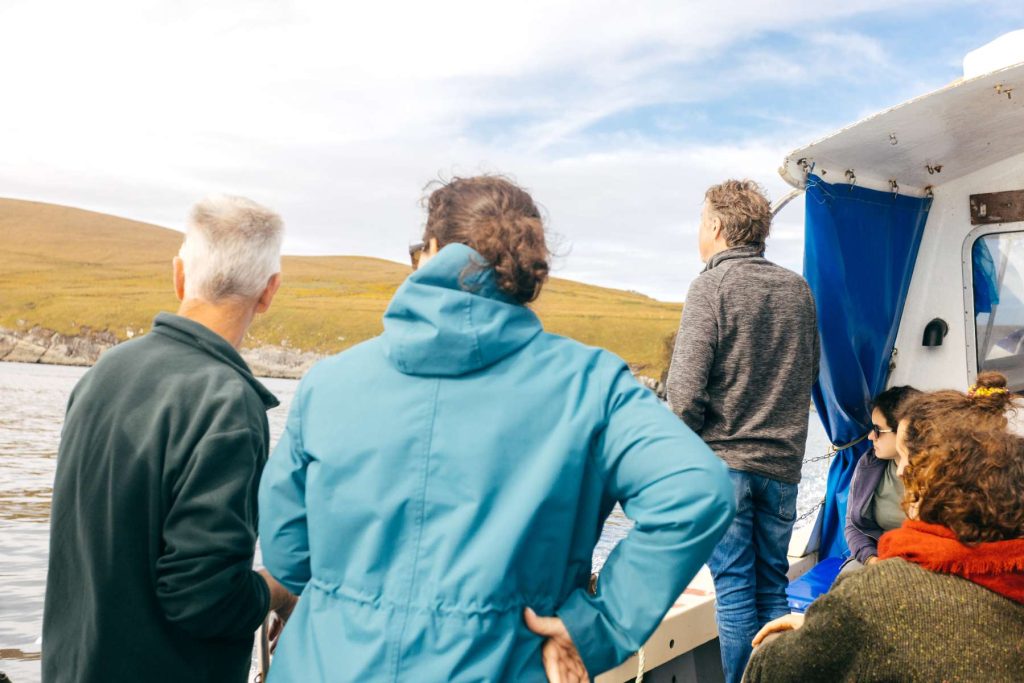
Our boats and the sea off the Kerry coast.